
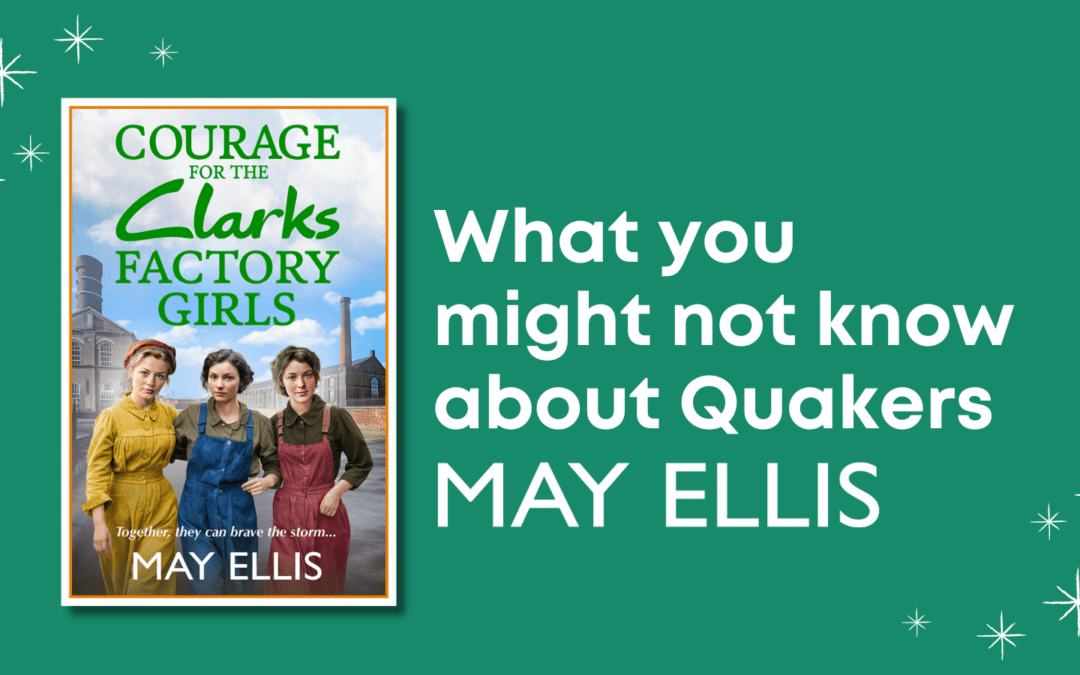
Courage for the Clarks Factory Girls is out today! Click to get a copy 📖
My research for my Clarks Factory Girls stories took me to my local Quaker Meeting House. As the Clark family are Quakers, it was important to look at their beliefs and practices in order to make my books as authentic as possible. I decided to attend a meeting to see it for myself.
As someone who grew up an Anglican, it was a strange but pleasant experience. There were no hymns, readings or sermons. Prayer was silent, too. Everyone sat in circles around a simple wooden table–no altar–on which someone had placed a vase of fresh flowers. For an hour we sat in silence, each person looking within themselves for ‘the Light’ and having their own intimate, silent conversations with a higher power. Occasionally someone might stand and address the congregation if they felt compelled to share an insight they had gained through their silent contemplations on life, the universe and everything. Anyone can do this. There is no hierarchy, and any Friend can share their own experience of God. Quakers believe that you don’t need priests to connect with God, that the Light within us is our direct connection to a higher power. It’s up to each Friend to choose their path through life. That’s why some of them decided to enlist in the First World War while others were prepared to be jailed or even executed for refusing to take up arms. Either choice requires bravery and faith.
The different nature of Quaker worship has always attracted mistrust from other denominations. Clergy from other churches felt threatened when their authority in religious matters was not recognised. In times of war, those who believed everyone should fight were hostile to those who believed in pacifism. In a small community like Street, where Clarks had such a strong influence, it created tensions between neighbours and work colleagues. Men like Louisa’s father were conflicted – he believed all men should fight for King and country, yet he felt unable to openly challenge his pacifist employers about this. When his daughter chooses to love Mattie, a Quaker, he is far from happy about it.
At the end of silent worship at the Meeting House, everyone shakes hands and gradually the hum of voices rise as Friends greet each other. The silent Quakers become chatty, friendly hosts. I loved it – both the silent contemplation and the subsequent chatter and I am now a regular at the Meeting House.
May Ellis