
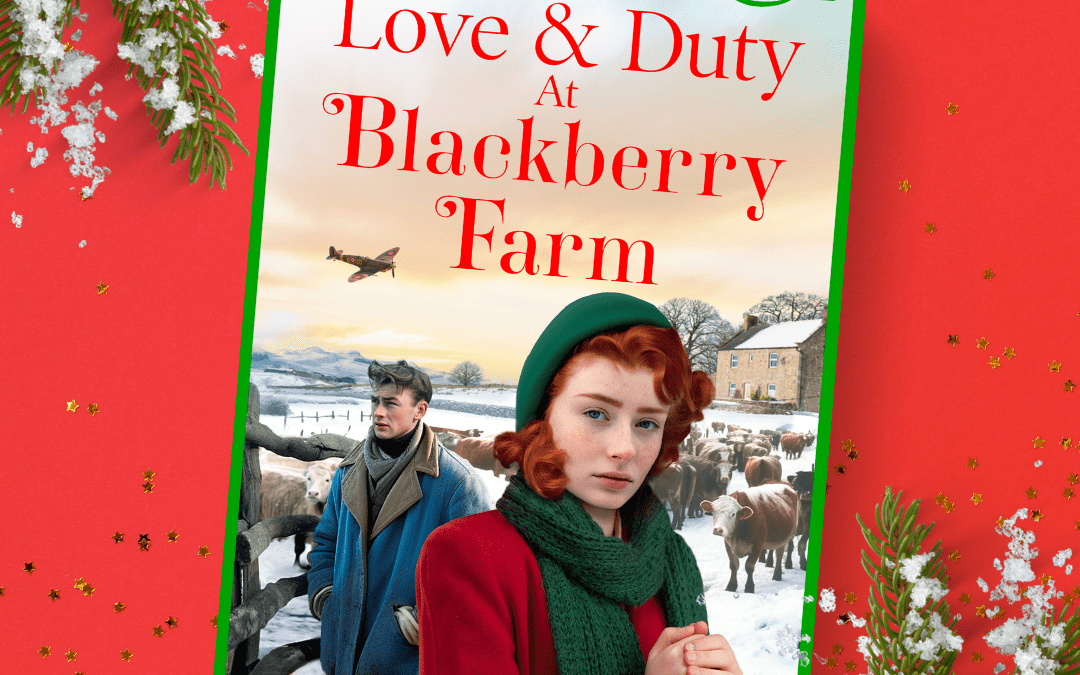
Winter in wartime must have been especially hard. Rationing and shortages meant that there was very little of anything to bring cheer to a dull day and dark evenings. Isolated farms and villages might be cut off in the deep snow such as fell and lingered in the winter of 1942.
At Blackberry Farm they would have had to milk the cows and feed the animals whatever the weather and the snow and ice could be treacherous on untreated roads. At the beginning of this story, one young woman discovers the perils of icy fenland roads and Artie rescues her and his car with his tractor. In country areas in bad weather the trusty tractor comes to the aid of neighbours stuck in snow drifts with their cars.
When snow lingers in the country, fields, roads, hedges merge into a blanket of white overnight; beautiful but also unrelenting and dangerous at times. The hill farmers know only too well the perils of sheep left up on the hills too late. They can be buried in snow drifts unless rescued. These days the roads soon clear with the volume of traffic, and there are gritters on the roads but that wasn’t the case back then, especially in wartime when petrol was in short supply. It was a struggle to get the milk to the train on time.
It wasn’t all gloom and doom. People enjoyed local pastimes, a visit to the pub, events at the village hall, and time to stand and chat with a neighbour. There wasn’t as much hustle and bustle and they made the most of what they had. A wedding, christening, or simply someone coming home on leave was a reason to celebrate and there was always a way of putting some special food on the table, especially for a farmer’s wife. There would be the home-cured hams, eggs, their own milk, and fruit picked locally and bottled or stored in the autumn. Even though they were only allowed to kill a couple of pigs for their family during the year, the odd one may have gone undetected. In spring and summer there would be game to shoot in the fields but not much in winter. The occasional pheasant, perhaps, but the rabbits would be warm in their burrows.
The farmer’s wife made the most of what she had, and on a raw day a tasty pot of soup, perhaps only vegetable with some chicken stock – or some meat if there was any – would be kept going all day for the men when they came in for a warm by the fire. She would have had sacks of potatoes, carrots, and onions, and, perhaps parsnips and turnips, stored in an outhouse.
It is against this background that Artie struggles with duty and a sense of being tied to the farm when his heart is elsewhere.