
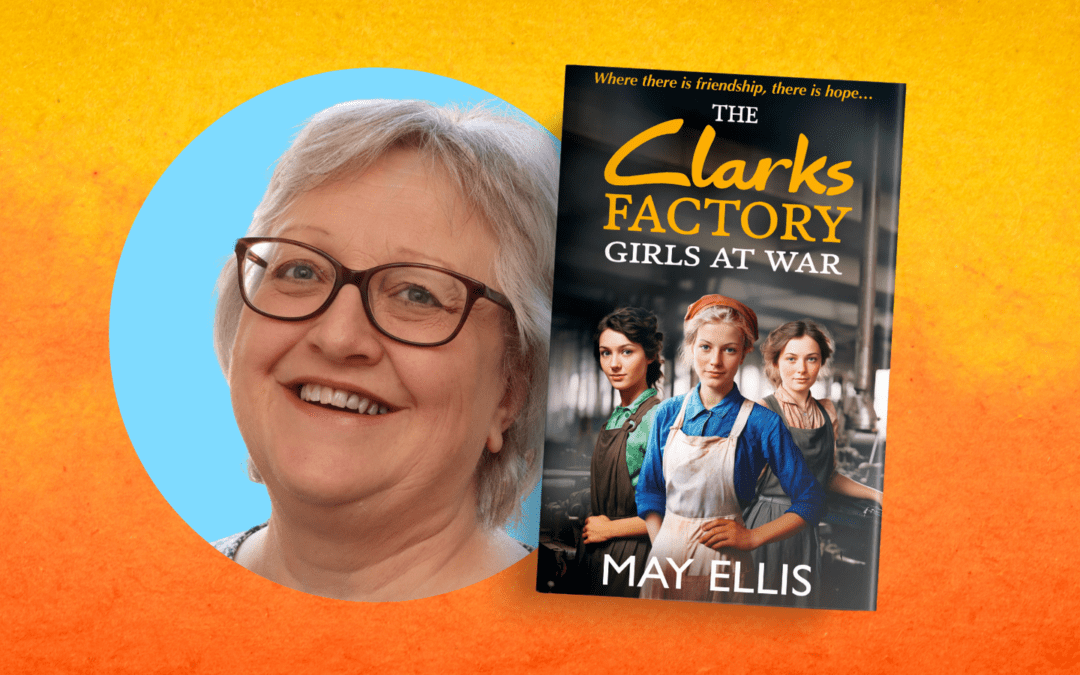
The Clarks Factory Girls at War by May Ellis is out today!🎉
The 1914-18 war had a huge impact on the lives of ordinary people. Thousands of young men perished in horrific conditions, leaving their families and communities shattered.
In The Clarks Factory Girls at War, there’s an extra twist as the major employers in the village of Street in Somerset are Quakers and Pacifists. Of the four thousand or so people working at the Clarks shoe factory, many were also Quakers, known as Friends. When war is declared, many resisted the call to enlist, citing the Quaker Peace Testimony which declares that all war is wrong. This caused some conflict between them and those who supported the war. I was interested to find that the Quaker ethos encouraged individuals to look within themselves for guidance and some of them chose to fight while others refused to do so. This is a dilemma facing two lads in The Clarks Factory Girls at War. Mattie and Lucas are both Friends and don’t want to fight. But the pressure on them is enormous.
The girls might not have had to fight, but they faced their own problems. One of their influences at the factory was the only female director, Miss Alice Clark. She was a prominent Suffragist, historian and academic as well as managing the Machine Room where my characters work at the shoe factory. But while Alice had the freedom to do all this, the girls were limited by their status as working-class girls. One needs to work to help support her widowed mother. Another is treated like a slave by her bullying father. The third finds love, only to face opposition from her parents because she is Anglican but her sweetheart is Quaker. All three of them are bright and capable, but held back by society. They admire Miss Clark for her ability to fight for the rights of all women.
The war meant that women had to step into men’s roles, giving them more power over their own lives. But for the Clarks Factory Girls, it was a long, slow process. For them, war meant fearing for their brothers and sweethearts; working harder than ever to make sure the factory survived the shortages of labour and materials caused by the conflict; and learning that they couldn’t rely on their menfolk to be there to protect them.