
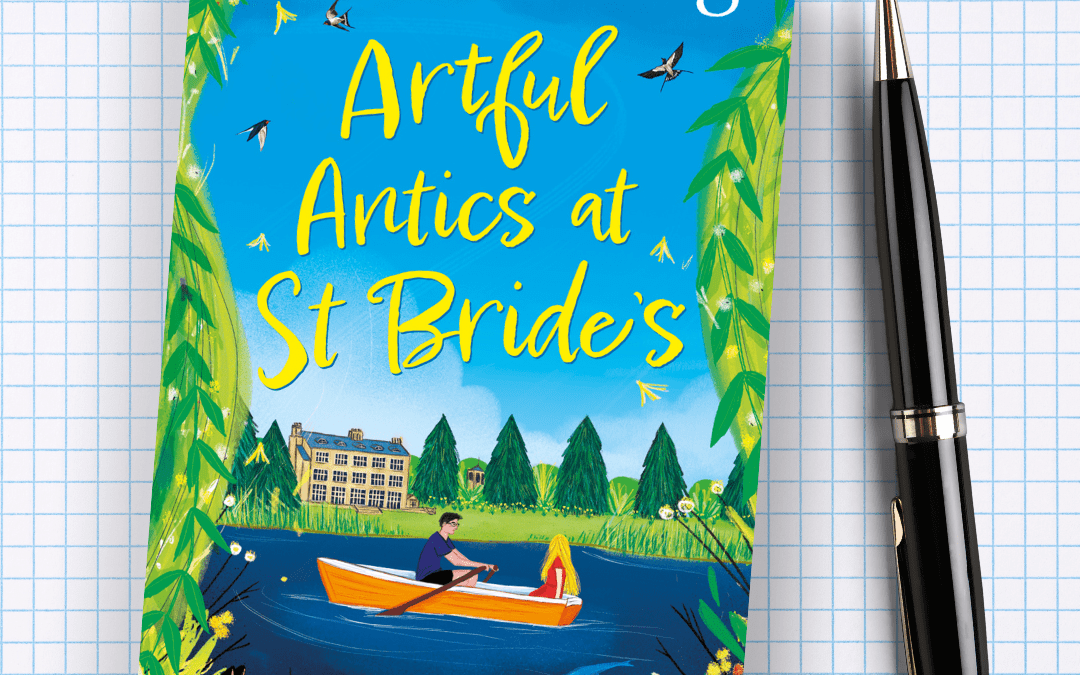
In each episode in my cozy mystery series, I add new characters and settings to old favourites from previous books. In my latest novel, Artful Antics at St Bride’s, the school acquires a secretive new pupil, Frieda Ehrlich. Her school fees are sponsored by enigmatic tycoon Sebastian Goldman-Coutts, the new owner of Torrid Manor, which lies hidden behind high hedges and forbidding walls just a few miles from St Bride’s School.
When English teacher Gemma Lamb is invited to visit Torrid Manor, she is astonished to find the historic mansion is almost derelict. With only candles lighting the house, Gemma snatches shadowy glimpses of its former glory. Why would a supposed billionaire choose such a shabby home? What is he hiding? Or who is he hiding from?
These days, Cotswolds mansions are highly sought after by super-rich celebrities from actors and rockstars to politicians and royalty. Having made their fortunes elsewhere, they escape to a rural idyll. Yet the mansions’ original owners got rich on a very local trade: Cotswold wool.
In medieval times, the thick, curly, golden fleeces of the ancient Cotswold Lion breed of sheep produced the finest wool in the world. It was as prized and prestigious as precious metals and jewels.
Cotswold merchants amassed great wealth by exporting wool throughout Europe. Like modern billionaires, these rich merchants invested their riches in property. They commissioned the building of prestigious homes, fashioned from the distinctive golden-hued Cotswold stone. Many also endowed the construction of magnificent churches.
As demand soared, market towns sprang up throughout the region as trading centres for sheep and fleeces. If you’ve ever wondered why so many Cotswold town names include the word “Chipping”, it’s because “Chipping” is the local word for “market”. Smaller buildings provided studios and workshops for wool processors: spinners, dyers and weavers. Street names bear witness to their original purpose, such as Dyer Street or Weavers’ Row. Laurie Lee’s local pub was The Woolpack.
Sadly, the Cotswold wool trade declined during the Industrial Revolution, with the rise of the steam-powered mills in the north. But the honey-coloured mansions, churches, and market towns are a lasting legacy of the Cotswolds’ Golden Age of Wool.
In Artful Antics at St Bride’s, Gemma Lamb detects that Sebastian Goldman-Coutts is hiding dark secrets at Torrid Manor – including his own agenda for St Bride’s. So begins her latest quest to save the school, with unexpected consequences…
You can pick up a copy of Debbie’s brand new cozy mystery Artful Antics at St Brides here: https://mybook.to/Artfulanticssocial