The Victorians long had a fascination with death, science and religion so when, in 1848, two sisters from New York claimed they could communicate with the dead, it kicked off the spiritualist movement, a phenomenon that peaked in the 1880s, but still has followers today.
Death was commonplace back then. Nearly a quarter of babies were not expected to live beyond their first birthday, infectious diseases swept through crowded cities, and the average life expectancy in England, even by 1900, was only fifty. Parlour séances, table-rapping, and spirit photography found eager audiences, as mediums claimed they could summon loved ones from the dead.
Increasingly, men of science sought rational explanations for these strange phenomena, but fervent believers still attended séances in their thousands. Many mediums were exposed as fraudulent; tables levitated by hidden wires, luminous paint made ghostly hands appear, and spirit trumpets, tambourines, and ectoplasm were simply clever props and sleight of hand.
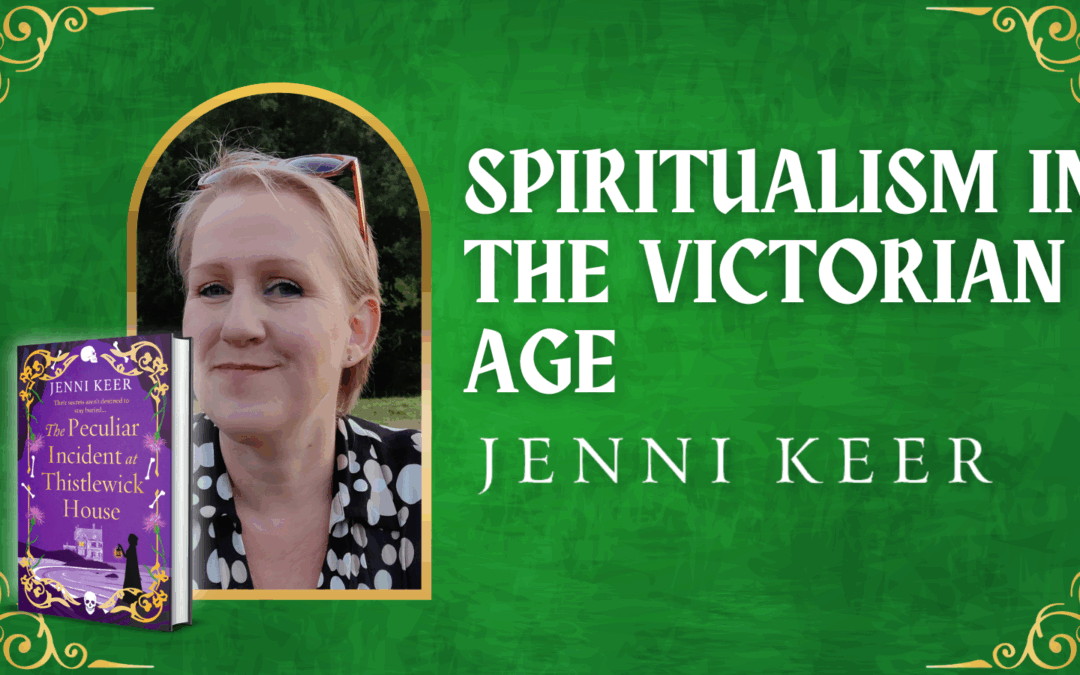
In The Peculiar Incident at Thistlewick House we follow Edward Blackmore’s story. He’s a popular London medium in 1895 and we quickly learn that he’s a charlatan. When he’s summoned to Norfolk by his desperate cousin who believes his wife has been possessed by an evil spirit, he is reluctant to go, as there is bad blood between them.
It was unusual for men to take up this profession, as many believed women were more emotionally receptive to such things, but Edward uses this to his advantage. He doesn’t charge his clients, instead inviting charitable donations, and his reputation grows. But imagine his surprise when he discovers that the lies he’s built his livelihood on might just be real, after all…