
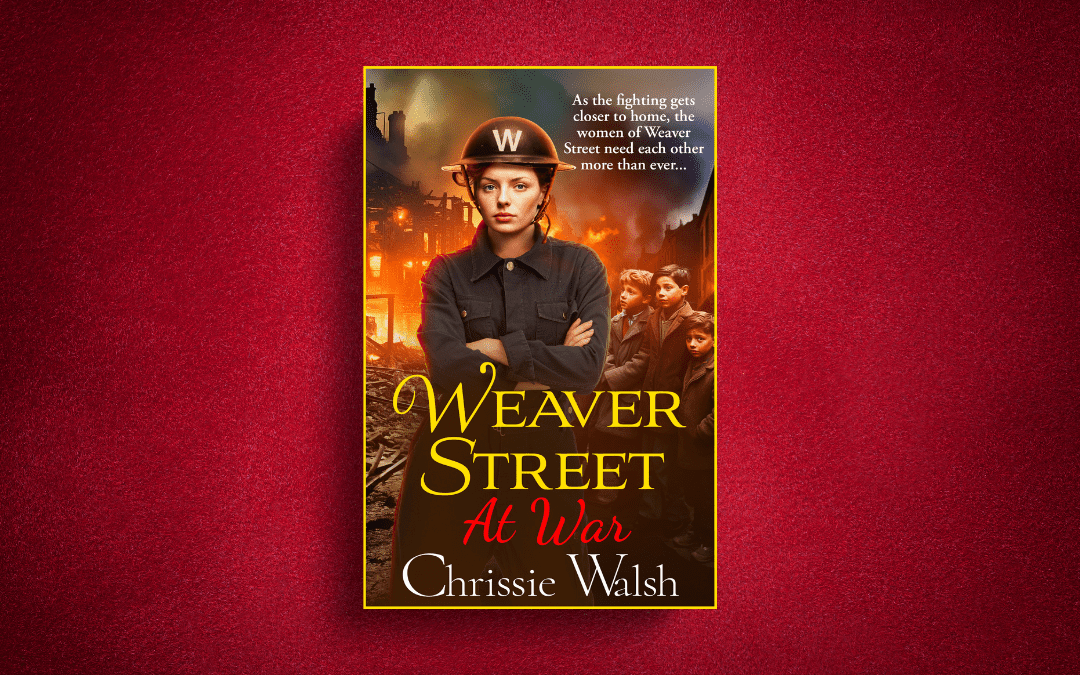
I’m a great believer in ‘write about what you know’ but I was only a small child during WW2 and the memories of that time are few and far between. I do vaguely remember being bundled up in a siren suit, a Mickey Mouse gas mask slung around my neck and me crying as my mam rushed me and my older sister, Maureen, down the street to the air raid shelter at night, sirens blaring. The shelters stank of pee, sweaty bodies and stale cigarette smoke. A more vivid memory is of VE Day, me wearing a new red blazer and red shoes and waving a Union Jack as I stood on our garden wall watching the brass bands oompah along Wakefield Road. Not much to go on when you’re writing a novel about the Second World War. So, this is where research comes in.
In my case, it starts at home with my mother’s memories of her wartime experience, and the ration books, ID cards and photographs that she passed on to me. It’s surprising how much information can be gleaned from such artefacts. All useful in making your characters real.
Before the war, women were the homemakers but by 1945 six million were employed in wartime work. The British PM, Clement Attlee, gave a speech in which he said ‘The work women are performing in munitions factories has to be seen to be believed etc.’ This applied not just to munitions but to the women who drove trains, trams and lorries, or became members of civil institutions such as the WVS (Women’s Voluntary Service and the ARP (Air Raid Precaution) keeping the home-front functioning. Many more enlisted in military service: WAAFS (Women’s Auxiliary Air Force), the ATS (Auxiliary Territorial Service, WRENS (Women’s Royal Navy Service). And, of course, nursing in hospitals on the home front and field stations on the front line.
I enjoy researching almost as much as I enjoy writing so I began by delving into On Her Their Lives Depend by Angela Woollacott; Women in WW2 by Neil Storey and Molly Housego; Women in the War by Lucy Fisher; Women at Work in WW1 and 2 by Paul Chrystal. Next, I searched the Internet. Learning about the work WAAFS (Anna Carswell) did in Western Approaches at Derby House was fascinating. Her work involved plotting, navigating and communicating enemy movement to the convoys at sea, planes in the sky and troops on the ground; skills like hers saved the lives of thousands of airmen, seamen and infantry. After that, I searched for the duties of ARP warden (Lily) who organised air raid shelters, enforced the blackout, assisted in search and rescue after an air raid and administered basic first aid. Many nurses volunteered for duty on the front line but married women who weren’t allowed to work in hospitals (Molly) volunteered to work with the AAS (Auxiliary Ambulance Service) and attend victims of air raids. There are some wonderfully informative sites on the Internet (too many to name) that give an insight into the roles women took in wartime particularly the personal stories of courage and endurance.
Once I’ve gathered all the relevant information, I then weave it into the plot with as much accuracy and relevance to the story and characters as I can.