
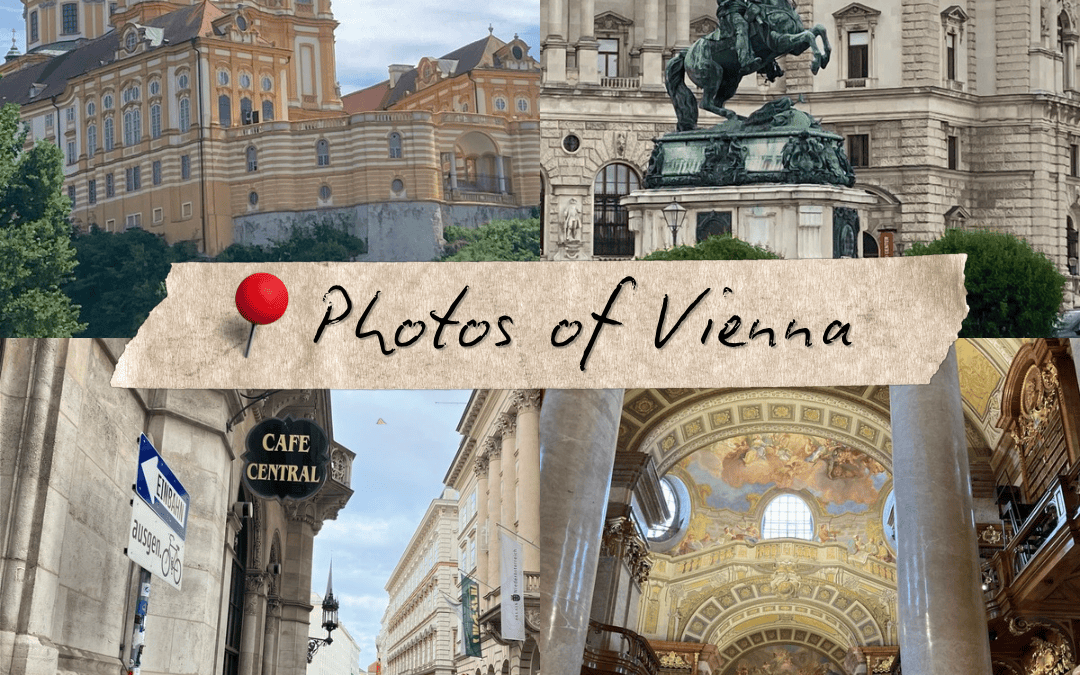
Researching Vienna in 1931
The first two novels in my Foreign Correspondent series are set in Berlin in 1930 and Vienna in 1931.
Superficially, there are similarities between the two cities. Most obviously, their inhabitants both speak German. In the 1930s, they both had large Jewish populations, yet anti-Semitism thrived in each. They were two of the most important cities in Europe culturally and by population.
Yet they were very different then. And they are even more different now, in the twenty-first century.
Naturally, as part of my research, I visited both. The key difference is, of course, that Berlin was destroyed by British bombs and Russian shells in the 1940s and then divided by a wall in the 1960s. But even in the 1930s, Berlin was a thriving, modern metropolis looking forward to the twentieth century with optimism. Vienna, on the other hand, was the beautiful old capital of a new, small country looking backwards to the time when it was at the centre of a sprawling empire encompassing a dozen languages.
I visited Vienna in May 2025 with my loyal research assistant, Barbara (I go on some of her corporate boondoggles too!). I always try to visit a location in the same month as the action takes place in the book. Much in Vienna is the same as it was in May 1931: the baroque buildings of the Hofburg Palace, the Opera and the National Library; the art nouveau “secessionist” metro stations and Secessionist Building; the beautiful Belvedere garden with its busty sphinxes and stunning view over the city to the Vienna Woods in the distance.
We took a day out to those Vienna Woods, scouting for the tree on the Cobenzl Road just outside the city where the fatal car crash at the beginning of Operation Vienna occurs. Of course, we had to establish which of the many Heurige in nearby Grinzing Archie and Esme chose to stop at and have a glass of new green wine. In the spirit of authentic research, it’s important not to take the easy first option but to explore all the alternatives.
Anti-Semitism was common in Austria in the 1930s: the right-wing Heimwehr was popular, and Hitler’s troops were welcomed by many of the inhabitants when they marched into Vienna in the spring of 1938. But Vienna was run by a socialist government for much of the 1920s and 30s; indeed, the city was known as “Red Vienna” because of its generous welfare and housing policies. One of my characters, a communist supporter, lives in the Karl-Marx-Hof, a dramatic and rather beautiful half-mile-long block of social housing on the northern edge of the city, which was besieged by the Austrofascist national government in 1934.
There is, tragically, one area of Vienna which has changed significantly. Leopoldstadt, just over the canal from the Inner City, used to be home to at least fifty thousand Jews from all corners of the Austrian Empire. Now it isn’t.
I love walking around a city I am writing about, especially when I’m in the middle of a novel. I can see my characters walking particular streets, sitting in cafés or – and this is a little weird – murdering each other. With all these thoughts bubbling away in her husband’s head, my loyal research assistant pours herself another glass of wine and reads a good book. Not written by me.
You can get your copy of Operation Vienna here: https://mybook.to/OperationVienna