
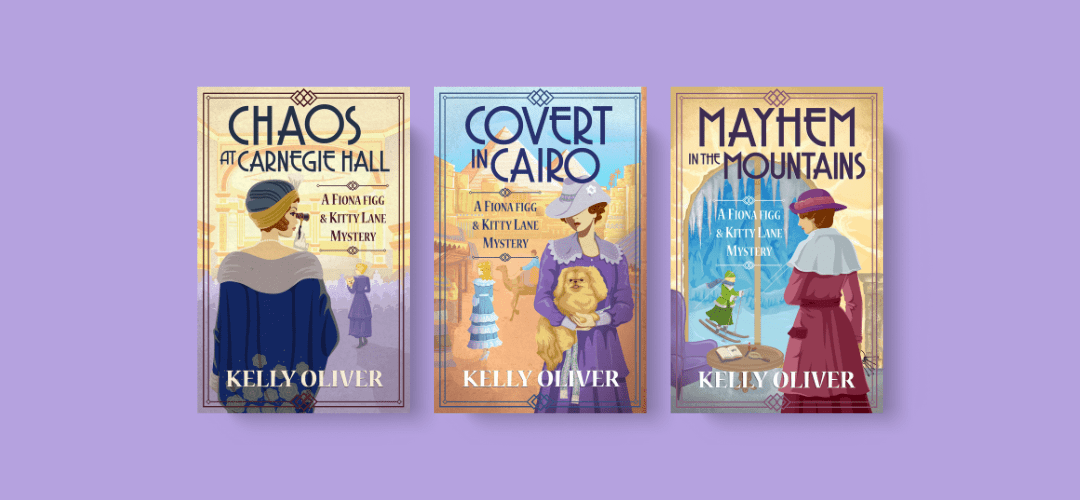
Before writing mystery novels, I was a philosophy professor. In my day job, a lot of my research focused on women’s issues. These days, I use some of that same research in my novels. All the novels in my three mystery series (Jessica James Mysteries, Pet Detective Mysteries, and Fiona Figg Mysteries) take up themes related to girls’ and women’s issues, especially the everyday ways in which girls and women are discounted or devalued. My goal is to empower those women through fictional narratives that bring the bad guys to justice.
That’s the best thing about fiction. You can create a world where justice is real.
One of the things I love about writing historical fiction is reclaiming important and interesting women from the dustbin of history. In the Fiona Figg Mysteries, I set out to resurrect women’s stories that have been buried. To begin research for every book in the series, I start by finding an interesting woman historical figure around whom I can revolve my plot.
For example, High Treason at the Grand Hotel features Margaretha Geertruida MacLeod aka Mata Hari. While Mata Hari hasn’t been lost to history, Margaretha MacLeod has. She was not a traitorous spy but rather a scapegoat for the men who set her up.
Mileva Maric Einstein, the first wife of Albert Einstein, is an important character in Villainy in Vienna. A brilliant physicist in her own right, Mileva collaborated with Albert on some of the most important work of his career, including the theory of relativity. While he never credited her for her contributions, he did give her the money he won with the Noble Prize.
Other notable women in the series include Archeologist Gertrude Bell in Covert in Cairo, Marie Marvingt, the French aviator who invented the air ambulance in Mayhem in the Mountains, and animal rights activists Lizzy Lind and Lady Nina Duchess of Hamilton in Arsenic at Ascot. Together, Lizzy and Nina founded the Animal Defense Society and started veterinary hospitals for wounded horses and other military animals. Nina opened her estate to abandoned pets in both WW1 and WW2.
It is fascinating to learn about these women’s lives. And I’m passionate about reclaiming their places in history. In this way, fiction helps create a more just world… if only in the imagination. But where would we be without imagination? Before we can live it, we must imagine it.
In my novels, I imagine a world in which girls and women work together to empower one another while delivering juicy feminist justice to their oppressors. Ahhh… nothing so delicious as good feminist revenge fantasy—sprinkled with lots of high-jinks and humor, of course.
Of course, Fiona Figg, proper English woman and fastidious file-clerk would never imagine revenge. And if she did, she wouldn’t call it revenge, she’d call it justice. 😉