
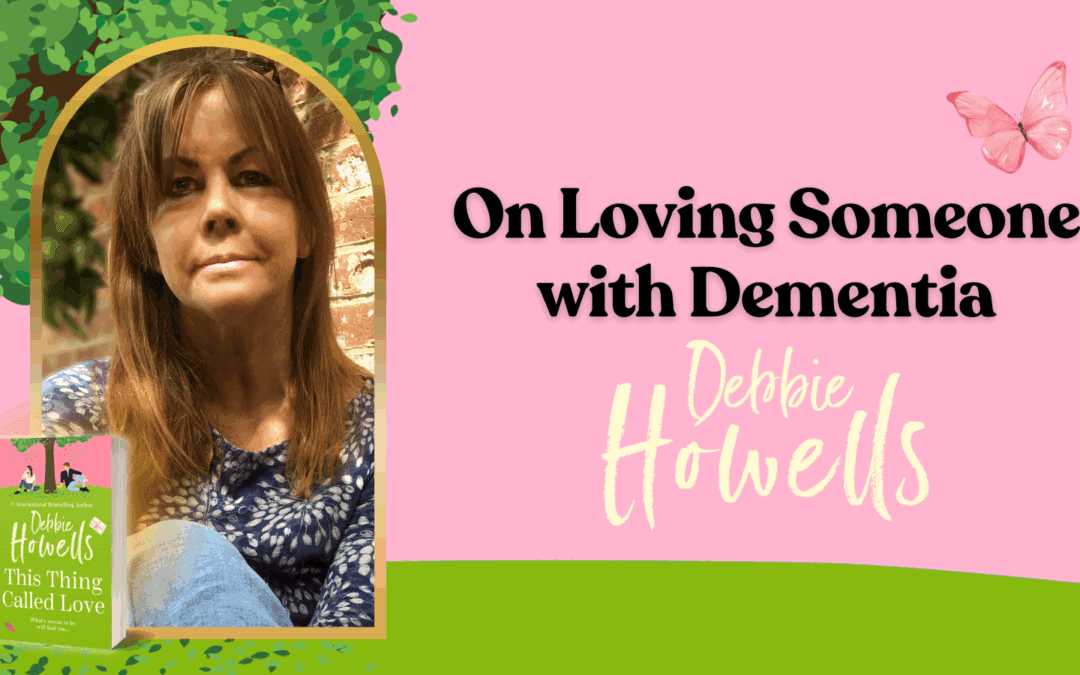
I’m thrilled to tell you a little about This Thing Called Love and introduce some of the themes. As in my other books, nature is a part of the story – in this case, a beautiful arboretum set in the English South Downs that’s home to rare species of trees and with people who love them, while another part of the story is set in the peaceful pine-clad hills of the island of Majorca.
This book also features early-onset dementia and how it changes the life of the person who has it, as well as the people close to them. It’s an awful, debilitating disease to watch the progression of, but rather than focus on that, I wanted to write about life going on – just in a different way. It’s about family, memories and humour. It’s also about the love such times bring out in people.
Like many of us, I have watched a close family member go through this. As a live-in carer for a while, I saw first hand how the sense of time disappears – in the confusion of daylight hours; the merging of past and present. The physical struggles with frailty, the gradual loss of mobility, the confusion that is so well-documented. Those heart-wrenching moments of realisation that things aren’t the way they used to be.
For someone who’s a carer, there is another challenge: in ensuring you have the care and support you need, because time disappears when you are caring for someone, too. I can’t tell you how many hours a week I spent on the phone, to social workers, care companies, health professionals. And we met so many dedicated, supportive people, but the care system is stretched way beyond capacity – and so vital to caring for someone at home. Carers are gold – yet in short supply and undervalued by a society that depends on them. Where do you begin to change that?
It’s difficult enough to watch someone you love taken over by any illness. Harder when care companies let you down because they don’t have enough staff. But you hold on because this is still the same person you’ve always known. You still share a past – and there are beautiful moments of connection, even as they become more fleeting. Looking at old photos and triggering memories… The sharing of a favourite meal, maybe a film. Yes, there is the struggle for words. The sentences that don’t come out quite right, the way the recent past is suddenly out of reach. It can be poignant, bonding, humbling; at times, you still share laughter. You learn, so much, and it’s a privilege to think you may have made a difference to someone.
But ultimately, of course, it can be heartbreaking. And if right now, you’re where I was, I know how it feels. Take all the help you can find. Talk to social workers, district nurses, GPs. Plan respite care if you can. Try to look after you, too.