
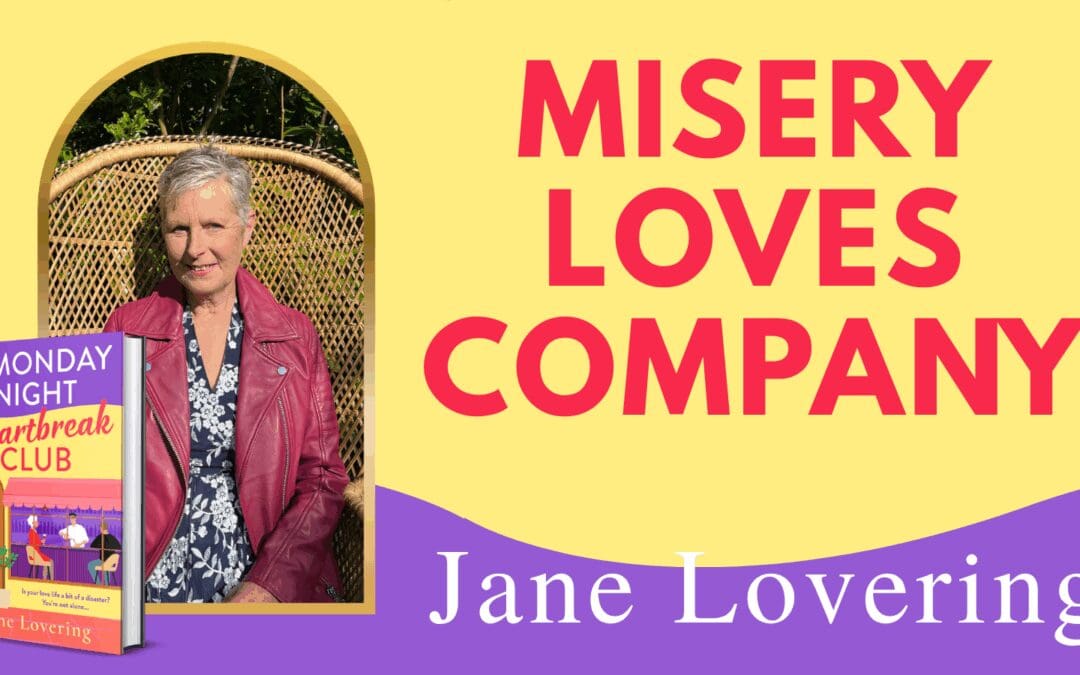
It’s a funny old thing, having your heart broken. It can feel like the biggest disappointment in the world; the loss of a planned future. Or it can feel like a betrayal – how DARE the world treat me like this? How you feel can depend on the nature of the heartbreak, we tend to use it in a romantic sense but you can have your heart broken by death, desertion, loss of any kind. Even loneliness can cause a kind of heartbreak.
We’re humans and, as such, we are a form of pack animal. We seek the comfort of our own kind when we are despairing – oh, not at once of course. We need time to lick our wounds and get our head around what has happened to us, what is happening to us, but once we have reached a certain point (and that point is different for every individual), we need other people around us. The Monday Night Heartbreak Club is about people who have reached that stage. They’ve come to that point of acceptance of heartbreak, but they are still processing and in order to do that they want the validation and company of others in the same boat.
People aren’t good with uncomfortable feelings. The accepted wisdom is that you need to sit with the feelings in order to come to terms with them, but when we’ve had your heart broken by another person then we can sometimes think, sod it with ‘accepted wisdom’. We want to go and tell the entire world how badly we’ve been treated so that it can pat us gently and assure us that, yes, we are still loveable. We did nothing wrong. The other person is, clearly, the worst specimen of humanity to walk the earth since Vlad the Impaler. We need validation. It might even be that those who lack a support network take longer to recover from a heartbreaking situation simply because they don’t have that external validation.
Hence the phrase ‘misery loves company’. It’s seen as a negative thing, often being read as ‘if you’re miserable then get out there and make as many other people miserable as you can.’ But I don’t see it that way. I see it as misery NEEDING company, but not in the form of more misery. In misery we look for normality, to reassure ourselves that the world goes on even when we feel it should have ended (do all these other people not know that your own personal world has come to a standstill?). We need to surround ourselves with the steady tick of the everyday, so that we know that we too will eventually be able to be part of it again and this feeling of unhappiness will mitigate, if not fade altogether. In our sadness we need people.
Sometimes it’s a hug, sometimes it’s a kind word. Sometimes just being with us in silence is enough. Some people want distraction in ordinary conversation. But, in bad times as well as good, we need each other. And that is what this book is all about.