
By 1930, Agatha Christie was a well-known mystery writer. She’d published five Hercule Poirot novels, including The Murder of Roger Ackroyd (1926), along with several other crime novels, including the first Miss Marple (1930). But her writer’s heart was not satisfied with writing plot-driven crime novels, as clever and original as they were. She longed to write something more personal, emotional, intimate, and character driven.
Under the pseudonym Mary Westmacott, she presented her first psychological novel, Giant’s Bread, to her publisher, Collins. They were skeptical but agreed to publish it as long as she continued to produce mystery novels for them, which, of course, she did. Agatha’s interest in music featured prominently in the book—she studied voice and piano in Paris in her youth. The book also explores childhood experiences based on her own childhood.
She went on to publish five more novels under the name Mary Westmacott. And the books had modest success and were met with generally good reviews.
In her autobiography, referring to another Westmacott novel called Absent in the Spring (1944), Agatha says, “I wrote the one book that has satisfied me completely.” She wrote the book in three days. It is the story of a woman stuck in the desert, alone without books or distractions, waiting for her train. Alone with her thoughts for several days, the woman reflects on her life and doesn’t recognize what she sees.
Remarkably, she kept her pseudonymous writings a secret for almost twenty years.
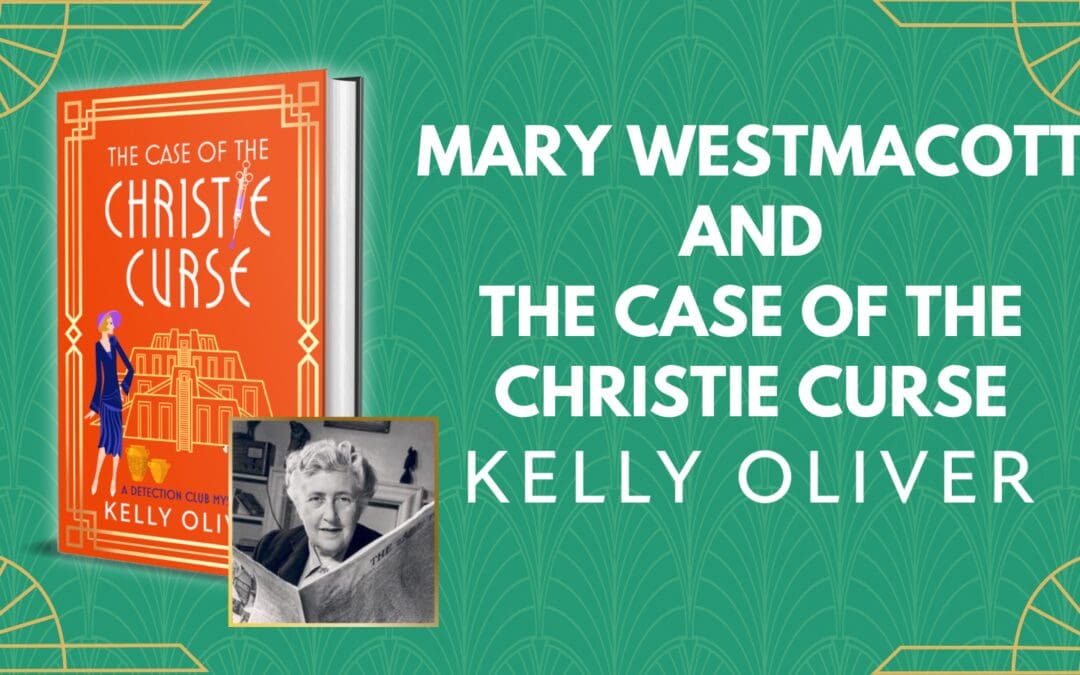
Agatha’s secret identity as Mary Westmacott is a subplot in The Case of the Christie Curse, the third book in my Detection Club Mystery series set in Mesopotamia just after the publication of the first Westmacott novel. There is much speculation about the identity of its author. How far will Agatha go to keep her secret?
BUY NOW