
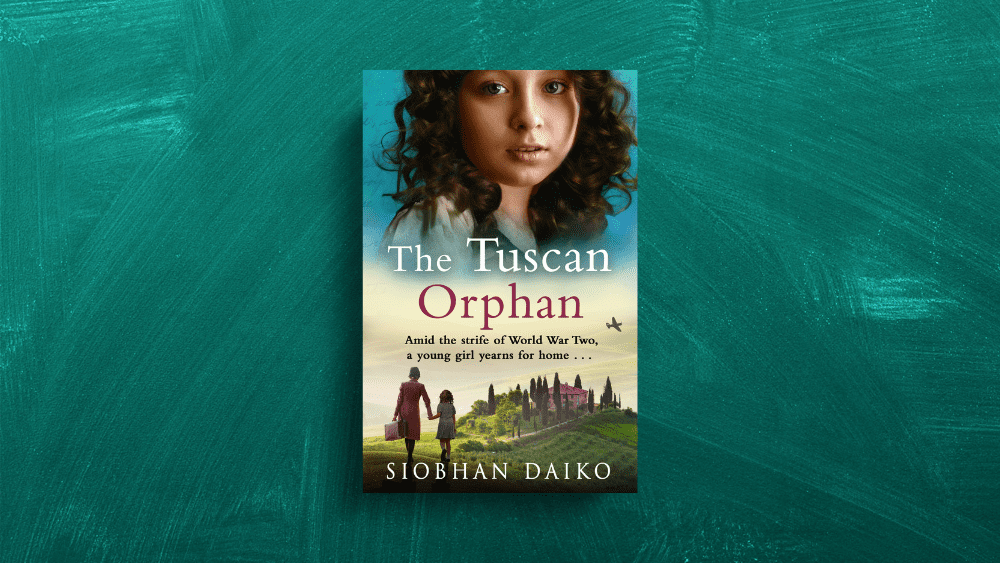
I was inspired to write The Tuscan Orphan when a friend told me about how his parents met for the first time in northern Italy when his mother was with the American Army Nurse Corps and that she’d looked after a group of orphans in the immediate aftermath of the Second World War.
My friend had few details of the circumstances and his parents are no longer with us, so I began to research for myself and found my inspiration in the fascinating memoir Remembering World War II by Lieutenant Elizabeth Janet Sutheit – who was an officer during the Allied Italian campaign ؘ– and They Called Them Angels, American Military Nurses of World War II by Kathi Jackson. I also read G.I. Nightingales: The Army Nurse Corps in World War II, by Barbara Brooks Tomblin.
The more I read, the more my main character, Carrie, came to life. I decided to place her with the US 56th Evacuation Hospital after studying the medical unit’s history. The 56th spent the winter of 1944-45 in Tuscany. So that is where I decided to set my story.
I knew the Catholic Church had helped Jews escape deportation by the Nazis, but the orphan in my story, Mimi, is fictional as is the convent where she is in hiding. While I was writing “The Tuscan Orphan”, I met a Jewish man who told me that his grandfather had been rescued by Florentine nuns when he was a small child, one of whom had hidden him under her habit while German soldiers were rounding up the rest of his family. When I told him about my book, he said I’d given him goosebumps.
I really enjoy writing about characters from the Italian Resistance so I read La Resistenza a Firenze by Carlo Francovich for research into the tragic events which took place in Florence. After the city is liberated, Carrie joins forces with Vito, a partisan, to search for Mimi’s missing parents, a quest which gives her hope for the future. My Italian characters are fictional, but their stories are inspired by the brave Florentine men and women who fought to free their city from oppression.
Mimi’s missing mother, Noemi is inspired by the Florentine resistance fighter, Tina Lorenzoni. Adamo, Mimi’s father, is loosely based on Luigi Morandi, who operated a secret radio to relay messages from the Allies to members of the resistance. Mario Carità, the infamous torturer, is a person in the public domain, a war criminal who died as described in my story, although I’ve used artistic license to include Vito in his demise.
Florence is a place I know and love. I was privileged to have spent part of my gap year there on an Italian language course many years ago, and I loved to stroll through the city while absorbing its unique atmosphere. I made Florentine friends whom I shall never forget and have been back several times to reacquaint myself with the Ponte Vecchio, the museums and the breathtaking views. Tuscany is such a beautiful part of Italy, rich in history and culture, and I’m thrilled to be setting my next novel there as well.