
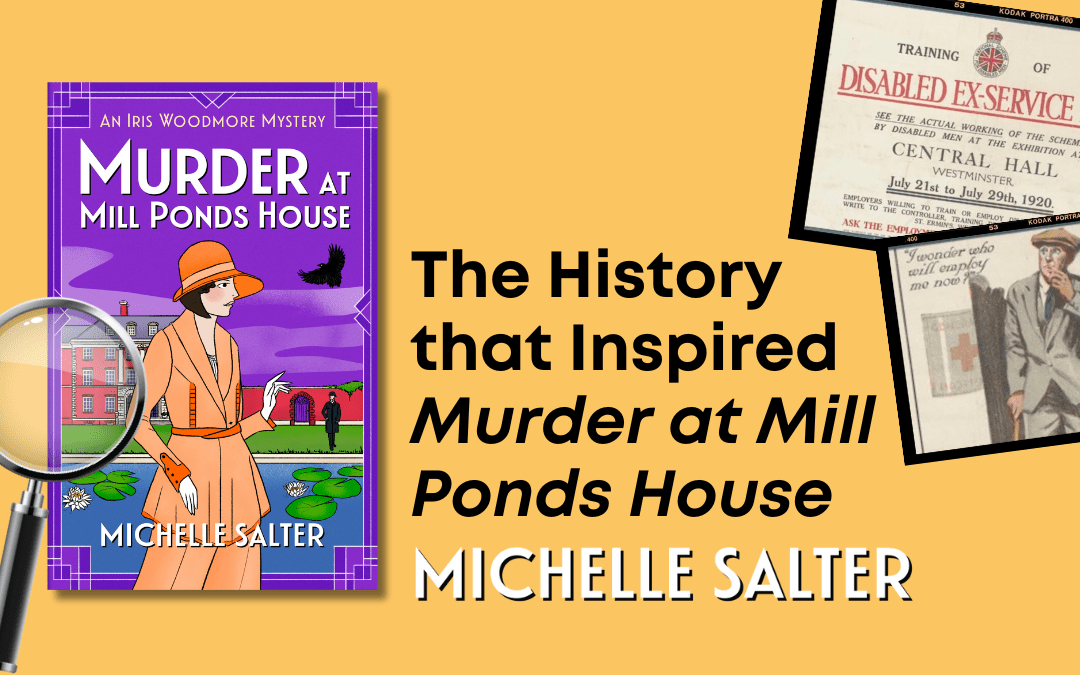
Murder at Mill Ponds House is set in 1924 when Britain was still reeling from the repercussions of the First World War.
After the armistice was signed in 1918, Prime Minister David Lloyd George promised to improve the standard of living for returning soldiers and provide them with a land fit for heroes.
As ex-servicemen would later comment, that was a long time coming. What many returned to was homelessness and the dole queue.
The post-war years saw a growing economic crisis with austerity, government debt, unemployment, low wages and industrial unrest. One factor in this was the record number of women who’d entered the workplace for the first time during the war and joined professions previously barred to them. They were paid less than their male counterparts and considered cheap and efficient labour.
This led to resentment of working women, and as Britain entered the 1920s, gains made towards equality during the war were being lost as women were forced to give up their jobs in favour of men, particularly ex-servicemen, who’d fought for their country.
This is reflected in my new book, which features Mill Ponds House, a hostel for unemployed and disabled ex-servicemen.

When the manager of Mill Ponds House is found dead after a violent row with Iris Woodmore, she’s accused of his murder and must fight to prove her innocence. She starts to investigate the tangled lives of the residents and patrons of the hostel and comes to realise that one of them must have committed Murder at Mill Ponds House.