For all of you who love a World War Two saga, here is a little insight into the author’s experiences of writing in this genre.
I find it ironic that before I began writing the Great Western Railway Girls saga series, I thought I knew everything about my own family’s war experiences, but I have discovered I really did not.
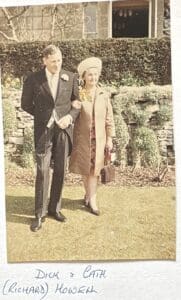
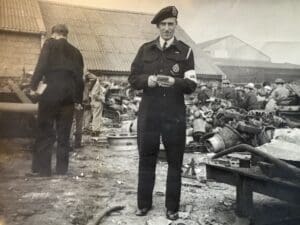
My paternal and maternal grandfathers died when I was very young. My father told me his dad was an engineer and helped design the Chieftain tank’s engine. My mother told me her father was a pilot, and I have seen his flight logbook left out at my grandma’s many years ago, with Tiger Moths and Lancasters recorded (my uncle now owns that). There is one other story that was often told, which is that my other grandmother was pushed into a ditch by a man when she’d taken my dad out for a walk in the pram when he was only days old, because the Germans were flying overhead.
But as I have researched the true stories of Swindon’s experiences during WWII, my mother began telling more details, and I have delved deeper into my own family history.
When I moved into a house in Swindon town centre in 1989, my maternal grandmother was always keen to mention that she had lived nearby and that a butcher’s shop in Swindon sold delicious faggots. She did not ever say that she lived in Swindon in 1940 at the beginning of WWII, when Swindon was bombed, but between my mother and me, we have worked out that this is the case.
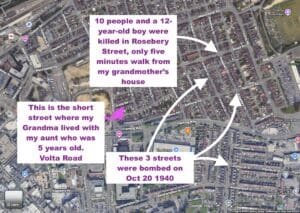
My grandmother is shown as lodging with family in Northumberland when the census (I dramatise in the Great Western Railway Girls’ first story) is completed at the point the war began in 1939. But soon afterwards, in 1940, she moved to Swindon because my grandfather was posted to an airbase in Wiltshire. They rented a property in Volta Street, which at the time would have been close to the canal and ten minutes’ walk from The Railway Village where my characters live.
It all then became very real to me as I wrote the GWR Girls story and realised that on the fifth occasion the Germans bombed Swindon, when there were fatalities, on 20 October 1940, my grandma and my aunt, who was five, would have either been in their house a couple of streets away from the bombings or in a shelter somewhere nearby. She would have significantly, definitely, felt the explosions wherever she was at the time and would have been well aware of the deaths and destruction in the area. I have her letters written after this, as in 1941, she is living with her parents and looking for somewhere else to live. Now we think she left Swindon after the bombings. She went to Cornwall in the end, possibly in the hope that there would be no bombing there.
The oddest thing is that neither she nor my aunt ever talked about that time, which has made me realise something else—it was not only the men who fought abroad who never wanted to speak about war experiences, it was also those on the front in England who endured years of bombing raids. When the war was over, after years of what must have felt like torture at times, they just wanted to get on with their lives. Leave it in the past and forget.
But in writing these stories, I feel as though, to some small degree, I have stood in their shoes and learned how hard it was to keep going and have hope. Yet they did, and the stories they chose to share after the war are those of the friendships they made, the laughter they shared, and the joy they found in the togetherness and camaraderie the war engendered among many. And how good the faggots were in the local butcher’s…
My respect for my grandparents is now immense.
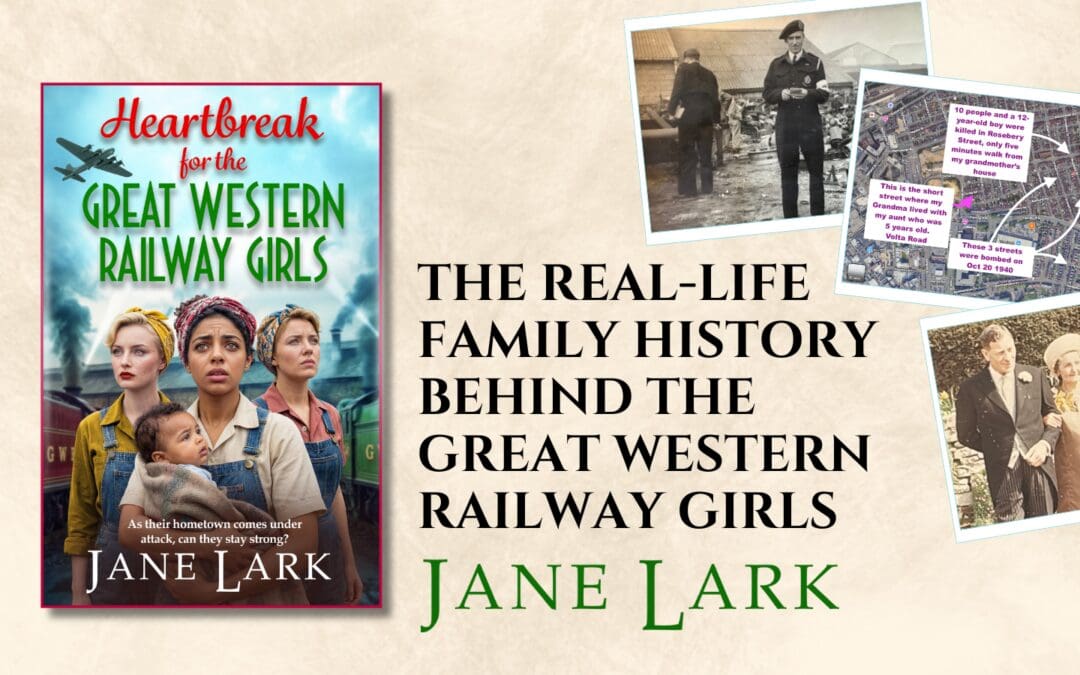
Grab your copy of Heartbreak for the Great Western Railway Girls!