
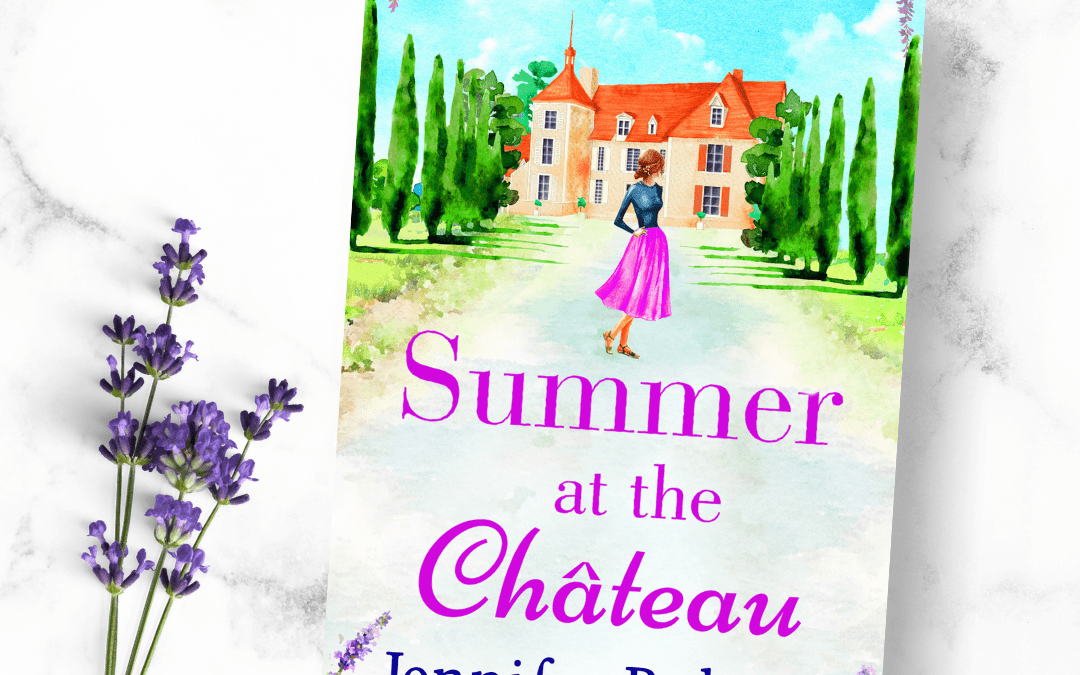
Summer at the Chateau by Jennifer Bohnet is out now ☀️
Start reading! 🇬🇧 https://amzn.to/32YHnmU 🇺🇸 https://amzn.to/3aLKi6V
Ever since Dick and Angela Strawbridge burst into our lives with their adventures at the abandoned French château they bought in the Loire valley, owning a château has become the dream for many people. A dream, judging from the number of château renovation related videos on YouTube, that people are turning into reality.
Even excluding smaller residences that call themselves château there are a thousand châteaux scattered through all the French departments. Top of the list of course is Versailles, closely followed by Fontainebleau, Chantilly, Chambord to name but four of the great châteaux. Further down the list there are more modest domaines, some well maintained, some in need of major renovation, others desperate for varying degrees of TLC. Some, of course, are beyond help. I’m told that these days renovating one of these old châteaux will set you back on average €1,000. per sq mtr. Deep pockets are definitely needed.
Why are there so many châteaux in France? Many French châteaux were originally built to serve as fortification in parts of France involved in battles. Many in the Languedoc region for example were built by the Cathars to defend their beliefs against the Papal crusade. In the Loire Valley many were set up as fortified islands against the English in the 100 years war. Any large noble estate would have one – and France had a lot of noble families before the Revolution. When the revolution dissolved the nobility, the special rights that these grand estates needed to survive were revoked and estates started to be broken up to raise funds.
The department of Finistere in Brittany where I live, is proud of the fact that the last château to be built in France, Château Trévarez, (known locally as the Pink Château) was built here. James de Kerjégu, Chairman of the General Council of Finistère, was, at the end of the 19th century, an important politician living between his local obligations and Parisian aristocratic life. In 1893, he instructed his architect, Walter-André Destailleur to design and build a château with all possible modern conveniences: central heating, electricity, hot water and lifts. The château was completed in 1907 and lived in by James’s daughter and her husband until the Second War. In 1941 Trévarez was taken over by the German occupying forces. The chateau was bombed on 30 July 1944 by the Royal Air Force when considerable damage was done to the west side of the building. Abandoned by the family after the war, the château fell into disrepair and it wasn’t until 1968 that the Conseil Général du Finistère bought the domain and started to restore the property and the gardens set in the 85 hectares of parkland. The statues and the water features are wonderful. Well worth a visit if you’re ever in Brittany.
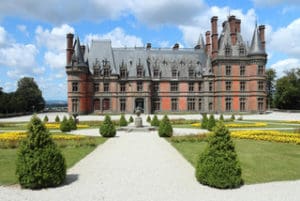
Château Quiltu in my new book ‘One Summer at the Château’ is an amalgamation of several properties that each had something I wanted in ‘my’ château but it is nowhere near as grand as Trévarez. Memories of visiting The Pink Château before lockdown though were inspirational.