

Briony, one of the main characters in ‘A French Inheritance’ decides to open a Brocante in a farm building close to her cottage, so I thought I’d tell you a little about French markets under their various names. I don’t know about you but I love a bargain and French markets whatever name they go under are wonderful.
Markets of all sorts play a big part in French life throughout the country. There are regular farmers markets, artisan markets, vintage clothes markets, night-time markets, troc et puces, brocantes, marché au puces and antique markets. And a lot of these markets take over the streets of French villages and towns. One of the most famous is the annual weekend Braderie de Lille held every September. And at the bottom of the rung are the local village vide greniers – similar to car boots but with tables not cars.
Of course being France there are certain rules and strict regulations to follow if you want to have a table at your local vide grenier. As a private individual you can only register for two vide greniers a year. And it is not unknown to see the police nationale casually walking around looking at vendors and their stalls.
Brocantes are more business like and manned by professionals who will know something about the decorative and antique pieces they are selling. The Marché au Puces are mainly stalled by antique dealers who will doubtless know the provenance of many of the things they are selling.
My favourite secondhand market of all time is the one I went to years ago, not long after we’d arrived in France – the Kermesse that takes place at the beginning of December every year in the circus tent at Monaco. A ‘Kermesse’ is a market or fair that is usually organised for charity as this one is. I’ve still got the black patent boots I bought there for ten francs twenty-five years ago!
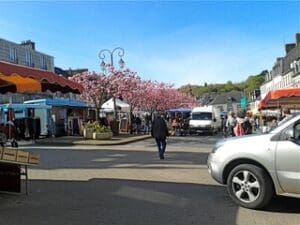
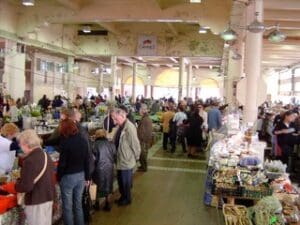
Two pictures of markets in opposite ends of France – one taken in the large covered market in Cannes, South of France and the other in the small town of Huelgoat, Brittany.