
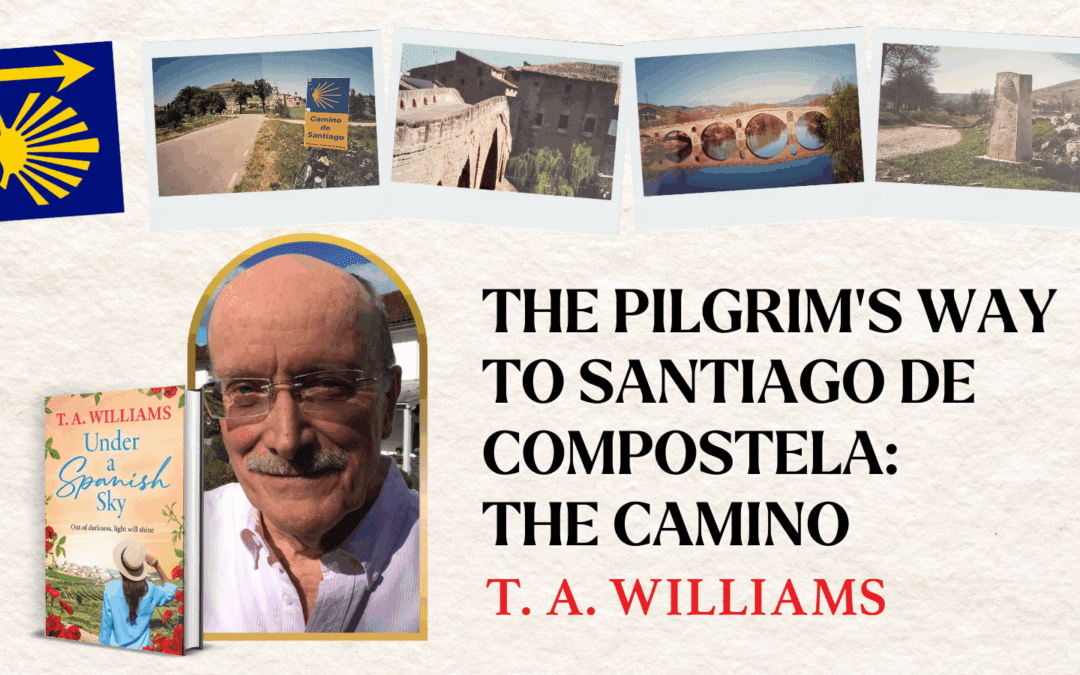
To the early Christians, pilgrimages were of vast importance. So important, in fact, that completion of a pilgrimage to one of the main Christian pilgrimage sites could bring full Remission of Sins; the slate could be wiped clean and the way to heaven cleared of obstacles. Just imagine, at a time when the existence of God was not open to debate but was just taken for granted, this was little short of a fast track to paradise. The most important sites were Jerusalem and Rome; however, in the Dark Ages, both became dangerous and difficult to reach. Then providentially (cynics might say suspiciously) in 813AD the tomb of St James the Apostle was discovered in Santiago de Compostela in northwest Spain and the flow of pilgrims picked up again unimpeded. Conservative estimates of numbers in the 11th and 12th centuries run into hundreds of thousands each year going to Compostela alone. Numbers dropped over the intervening centuries until by the twentieth century the flow had become a trickle. Now, in the 21st century, pilgrims to Compostela are once more on the increase.
Twenty years ago I was one of them.
Traditionally the main starting points for pilgrims coming from or through France were Vézelay (near Dijon), Le Puy (to the west of Avignon), Paris and Arles but the wonderful thing about pilgrimages is that you can start from anywhere. You can walk (the traditional method), drive or do as we did and cycle. Along with two friends, I chose to leave from Plymouth and travel down the western side of France until we met up with the official pilgrims’ route in the Pyrenees. Having limited time, we planned to complete the journey in three weeks.
Starting from Plymouth meant taking the cross channel ferry to Roscoff. The first two days through the undulating hills and valleys of central Brittany would have been more pleasant had we not been unlucky enough to encounter monsoon-like conditions. But from Nantes onwards we never saw a drop of rain again.
We stayed in cheap hotels en route and never encountered a bad one. Spain in particular still offers exceptionally good value for the traveller. It would have been cheaper to share rooms but, as our first wet days showed us, cyclists need a lot of space to wash and dry clothes in hotel rooms. Add to this the importance of a good night’s sleep and the extra cost was fully justified. 100kms a day for 19 days takes its toll on not so young bodies – I lost 7 kilos in three weeks – and sleep deprivation caused by snorers would have made matters far worse.
On the subject of snorers, I know that the purists shun hotels and guest houses and choose to stay in the dedicated pilgrim hostels to be found at regular intervals all along the Spanish section of the route. These hostels are provided for next to nothing by the church, town councils and charitable bodies and the accommodation they offer, while welcome, has two major disadvantages: the first can be loosely linked to the snoring thing, but you can add antisocial socks and queuing for toilets to the overall effect. The second disadvantage is the discrimination against cyclists. Priority is given to walkers – maybe rightly so – but this means that a cyclist arriving at a hostel mid afternoon has to wait until 6 or even 7 o’clock to hear whether there is room at this particular inn or whether it will be necessary to cycle on 20 or 30 kms before dark.
There is another reason why I would advise any but the boldest (or poorest) to try the hostels. Startling statistics show that numbers of people following the pilgrims’ route have increased tenfold in the last ten years and the hostel infrastructure is struggling to cope. If you have got the money, do everybody a favour – including yourself – and check into a hotel, guesthouse or bed & breakfast. And there are some excellent ones to be found. And if you have got any money left at the end you can always treat yourself to a night in the 5-star Hostal de los Reyes Catolicos in the main square in Santiago de Compostela.
All along the way we had our Pilgrim passports stamped at churches, town halls and pilgrim hostels. The passport is a vital document for all pilgrims as it contains the proof that they really have completed the journey. This is presented at the cathedral in Compostela at the end, and pilgrims receive a certificate of completion that they can proudly hang on their wall.
Why do it? Naturally, for people with strong religious convictions, the rigour of the pilgrimage and the ample time it provides for meditation are reasons enough in themselves. For those of us without any great religious feelings there is the beauty of the natural surroundings through which you travel – they don’t call it “Green Spain” for nothing. Add to this the sense of achievement at the end of the trip and the wonderful sensation of being a part of history. You cycle through wide sweeping open countryside, barely a house visible for miles, and then suddenly you are presented with a church the size of a basilica whose flagstones have been worn into deep grooves by the passage of millions and millions of feet. Stare in wonder at the Tree of Jesse carved on the door pillar of the cathedral in Santiago de Compostela at journey’s end and you will be hit with a sense of history that will make your hair stand on end.
Further Information from:
The Confraternity of St James
www.csj.org.uk