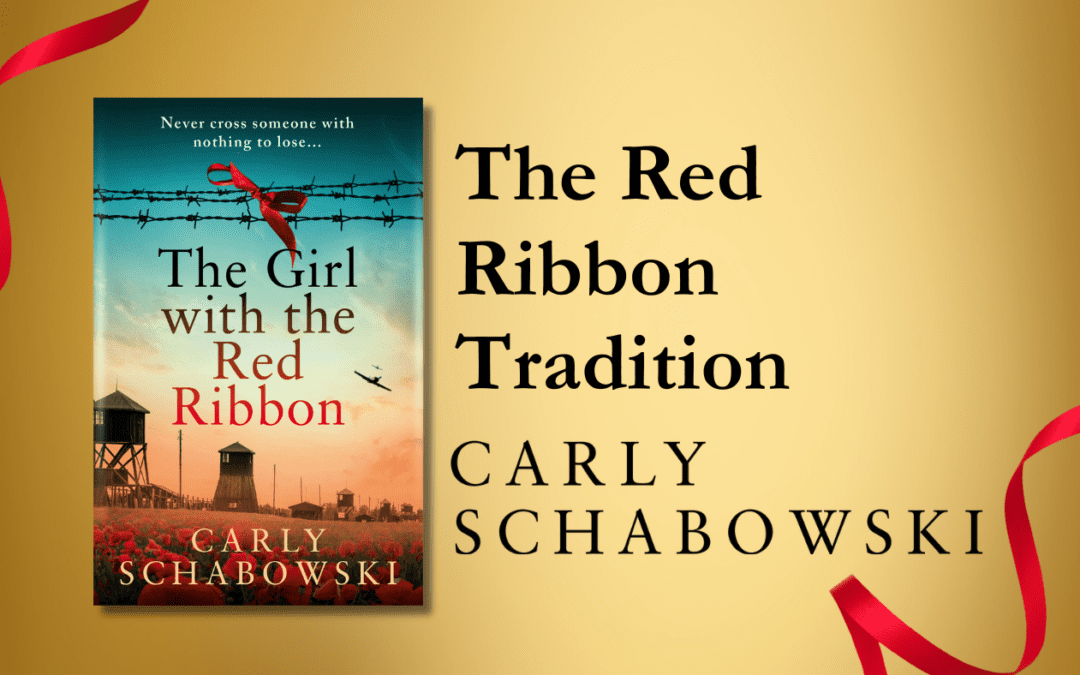
For years, tying a red ribbon to a baby’s crib or to their pram has been a tradition in Poland, to ward off bad luck and to keep the baby safe from evil. It was this image of a red ribbon and the folklore attached to it that made me see how a child growing up could become attracted to the supposed protection that it offers. Thus, my character Ania, a young woman who has been scorned all her life for being different – a genius in some ways but socially and emotionally behind her peers- clings onto the red ribbon that was tied around her crib, wrapping it around her wrist in Nazi-occupied Poland. Although she does not believe in magic, there is something about the ribbon that she cannot let go of, as for Ania, the ribbon represents the day she came into the world, and the day that her mother departed.
As Ania’s life weaves itself through the war, so too does the ribbon as it becomes a symbol of hope for Ania and for those she meets. Benj, Ania’s friend, is given a ribbon and carries it through his life until death, another ribbon is given to Isaac, a man who survives Auschwitz and cannot help but think that this small gift, given to him by a young girl, is what saved him.
In these times of terror, of war and trauma, each character needs something to cling on to – a symbol of hope amongst the darkest of times.