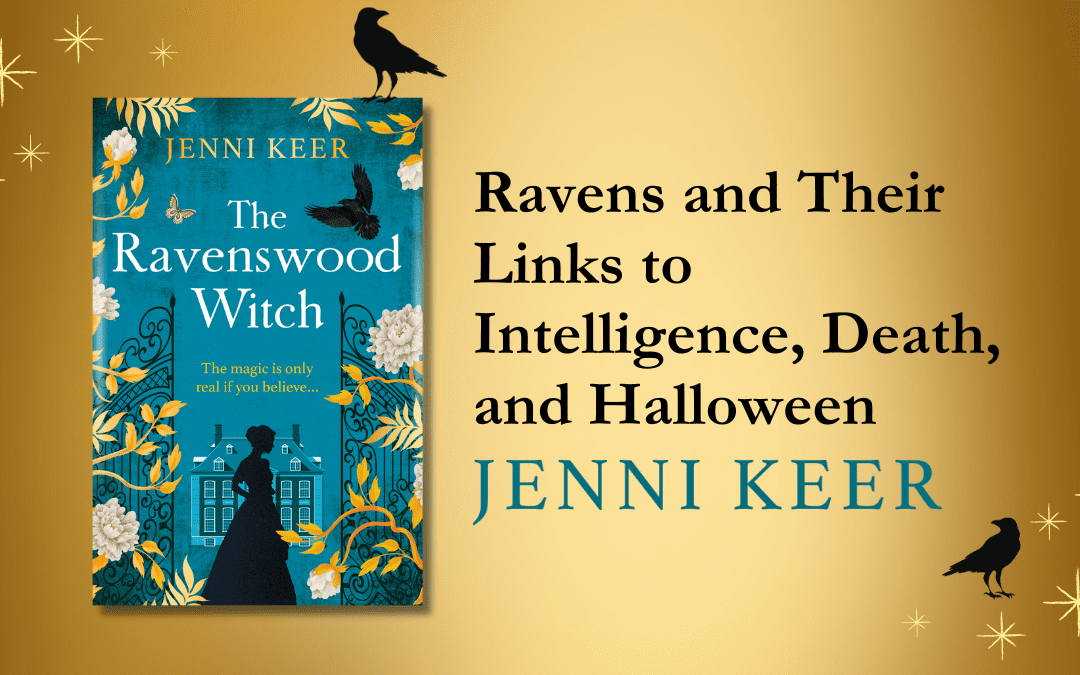
One of the standout characters in my latest novel, The Ravenswood Witch, is Bran, the raven, so I’m here to tell you a bit more about these incredible birds…
Ravens are the largest of the corvid family, which includes crows, rooks, jackdaws and magpies. Known for their intelligence, they possess remarkable problem-solving skills, and have been observed using tools, mimicking human speech, and even playing games, demonstrating a complexity of behaviour that is uncommon in birds.
They also have a long association with death and the supernatural. In Norse mythology, the god Odin had two ravens, Huginn and Muninn, who represented thought and memory, and flew over the world to bring him knowledge. In Celtic lore, ravens were associated with the Morrígan, a goddess of war and death, and were believed to appear on battlefields to foretell the fate of warriors.
Ravens’ links to death make them a common symbol in Gothic literature and Halloween imagery. The famous Edgar Allan Poe poem “The Raven” immortalized the bird as a harbinger of sorrow and despair, as it repeatedly croaks the word “Nevermore” to a grieving narrator. This was a poem my dad knew by heart and often recited out loud, so adding one to the story was a nod to my childhood.
With their reputation for being able to move between the worlds of the living and the dead, ravens are particularly suitable for Halloween-themed stories. In the book, all the drama culminates on All Hallows Eve and, with the house name “Ravenswood” coming to me very early in the planning process, a raven was inevitable. I had great fun writing about this mischievous bird, and spent hours researching their behaviour, even including darker facets of their nature in the story.
I hope you enjoy meeting Bran as much as I enjoyed writing about him.