
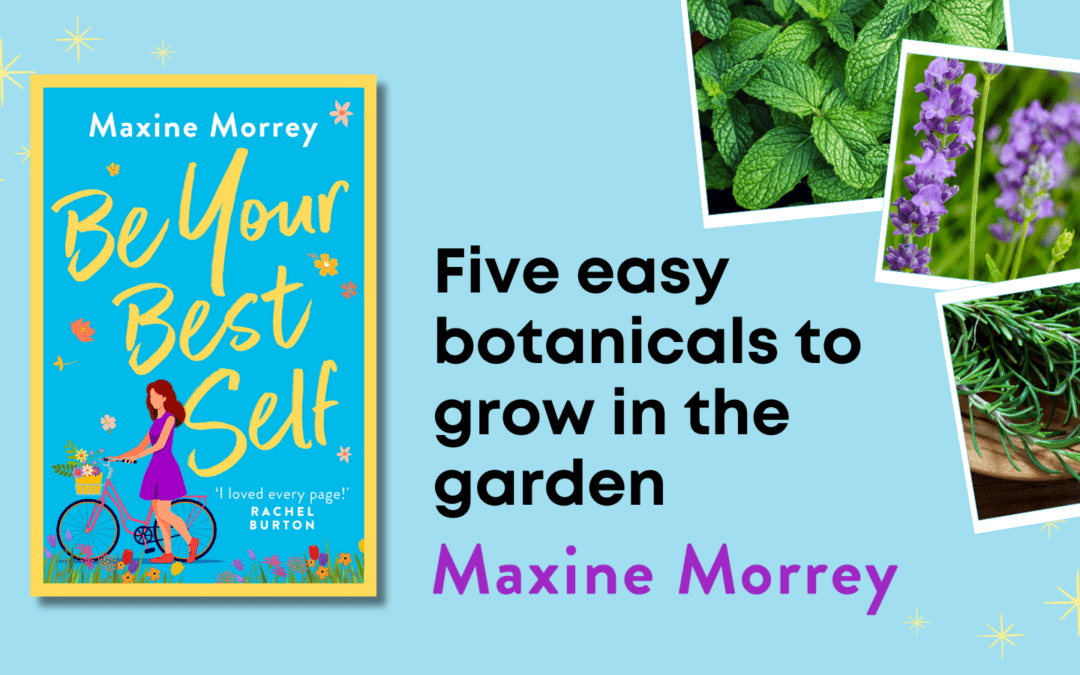
Be Your Best Self by Maxine Morrey is out today! Click to read 📖
Chamomile
Well known for its calming properties, growing chamomile in the garden means that you can make your own fresh relaxing tea. If you use fresh flowers, add 2 teaspoons per cup. For dried, just halve the amount. Peter Rabbit’s mother clearly knew the benefits when she gave him a spoonful of chamomile tea after he’d escaped from Mr MacGregor, having gobbled up his lettuces!
Another way to make use of this herb’s soothing properties is to throw a handful of flowers in the bath and have a relaxing soak.
Mint
Willow often makes herself some fresh mint tea, and mint is such an easy herb to grow, it’s a great one to start with. If you don’t fancy plain peppermint, there’s around 24 recognised varieties in the Mentha genus and hundreds of hybrids so feel free to try apple mint, strawberry mint or chocolate mint just for starters.
Of course, if tea’s not your thing, you could always use it for making mojitos! (Yummy non-alcoholic versions can be made just by leaving the rum out).
Just remember though, mint can be quite invasive so do keep them corralled in pots.
Rosemary
Easy to grow on poor soil and evergreen, rosemary is a helpful plant to have in the garden. It’s wonderful to cook with, the aroma alone is enough to make you hungry!
A tincture made from fresh leaves is said to improve focus and tea made with one to two teaspoons of fresh rosemary can help with headaches.
If you have a big enough plant and a fire pit, as Willow and Henry both have, you could also toss some cuttings on there and let the wonderful scent drift on the air.
Lavender
We couldn’t not mention lavender when it comes to brilliant herbs to grow in the garden. We often don’t think of them as herbs but more as ornamental plants. Even if you don’t use them for anything other than that, please do consider popping some in as the bees go mad for it!
As mentioned in the book with Willow’s lavender biscuits, it has various culinary uses and its wonderfully relaxing scent can be found in pillow sprays or fresh lavender parcels to help promote restful sleep. I also dab a tiny bit of essential oil on my temples to help with headaches. The same trick can be used to treat stings and bites.
A favourite way to use lavender that not only uses up odd bits of fabric that are too small for anything else, is to make up little lavender bags to pop in your drawers and wardrobes. The scent keeps those pesky moths away. These also make great presents, especially if it’s accompanying an item of clothing you’ve bought someone.
Feverfew
This is perennial, albeit fairly short-lived, that flowers quite prolifically with small multi-headed daisy-like flowers. It was also known as featherfew in past times. It’s been used for centuries for – as its popular name suggests – breaking fevers and colds but gained popularity in the 1970s when a woman told newspapers that she had cured herself of chronic headaches by eating leaves from the plant.
If you’re going to do this, they can be quite bitter so maybe disguise them in a sandwich. I’ve been taking this in tablet form in a mix of several herbs for just this problem and I have to report, I do seem to have less of the dratted headaches.
As good a reason as any to grow it is, of course, for nature. The open habit of the flower means that bees and all their insecty friends can easily get at the pollen.
*Disclaimer. This is not medical advice. Please do your own research and seek professional guidance before taking any herbs in case of allergies and especially if pregnant.