The concept of a found family is such an interesting one and for me, it has two meanings. I’ve spent almost twenty years being involved with fostering, as an educational consultant working with other professionals on fostering panels, to make recommendations about the suitability of applicants to become foster parents. It’s a huge privilege and responsibility to be part of the process and, once foster parents are approved, they come back for regular reviews, so that the panel can assess how they are getting on.
The most wonderful moments come when we hear about the families that have been created as part of that process. Children who have had the most difficult start in life are integrated into families they weren’t born into, but become as much a part of those families as if they had been. It doesn’t always happen, of course, and it’s almost always a rocky road to get there even when it does. Nonetheless, it’s the hope of achieving something like that which motivates many foster parents to take on the role, and it’s what makes being on a panel so special. Sometimes children are fostered for a short period of time, with the hope they can return to their birth family if the issues that brought them into care are resolved. Seeing foster parents and birth parents work together in the best interests of a child, who they both care deeply for, forms another kind of family that would be hard to define, but which has bonds that are equally hard to deny.
Panel members are given huge insight into the lives of those who apply to foster. Applicants complete a Form F with a social worker and no aspect of their past lives is left undiscussed. Sometimes the path to fostering has arisen from their own experiences of being cared for by those outside their birth family, or because they grew up in a household that fostered children in need. Some potential foster parents have biological children, and others have the desire to build a family through fostering. It’s taught me that families are formed and found in many different ways. Whether it’s fostering, adoption, egg and sperm donation, surrogacy, or step-parenting, being part of a family is far more than biological ties.
The other meaning it has for me is the family that can be found in the deepest of friendships – those people who’d be there for you at 3 a.m. if you needed them to be, and who you can share your greatest fears with, knowing they’ll always be on your team. I feel very lucky to have friends like that in my life, and they kept me going in the darkest periods of my life, through bereavement, relationship breakdown, and even cancer. I’m also lucky enough to have a sister who’s like a best friend, so I really get the best of both worlds. I know not everyone is that lucky and that found families are often the most important thing in people’s lives, particularly when the families they were born into are unable to accept them for who they are.
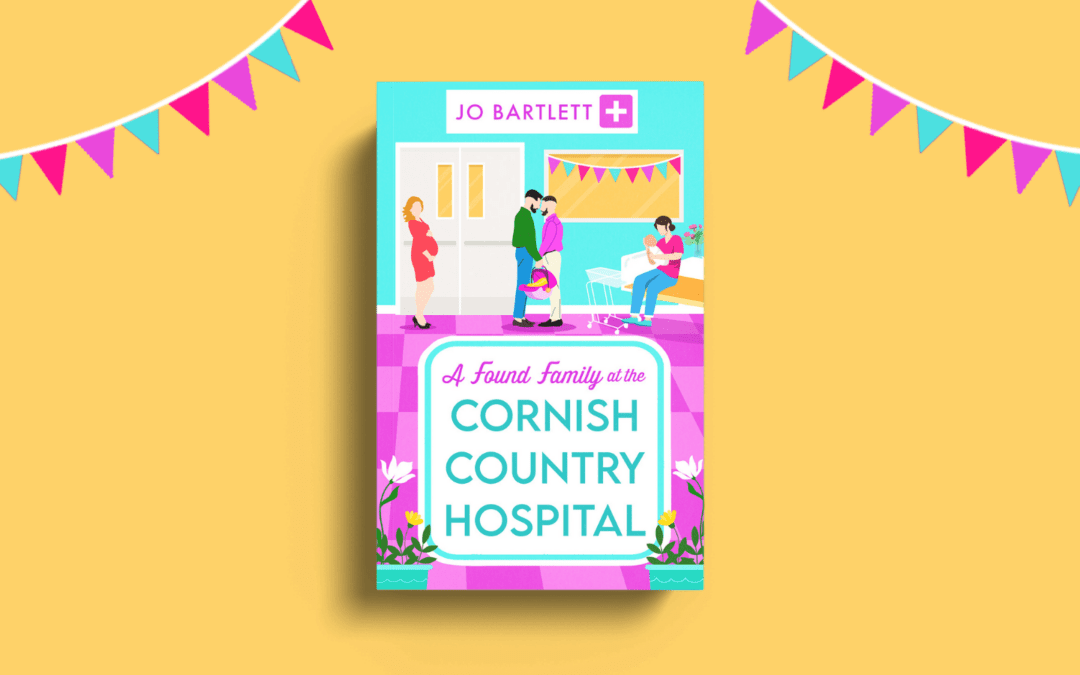
All of these themes are bound together in A Found Family at The Cornish Country Hospital and I really hope you enjoy reading it as much as I enjoyed writing it.