
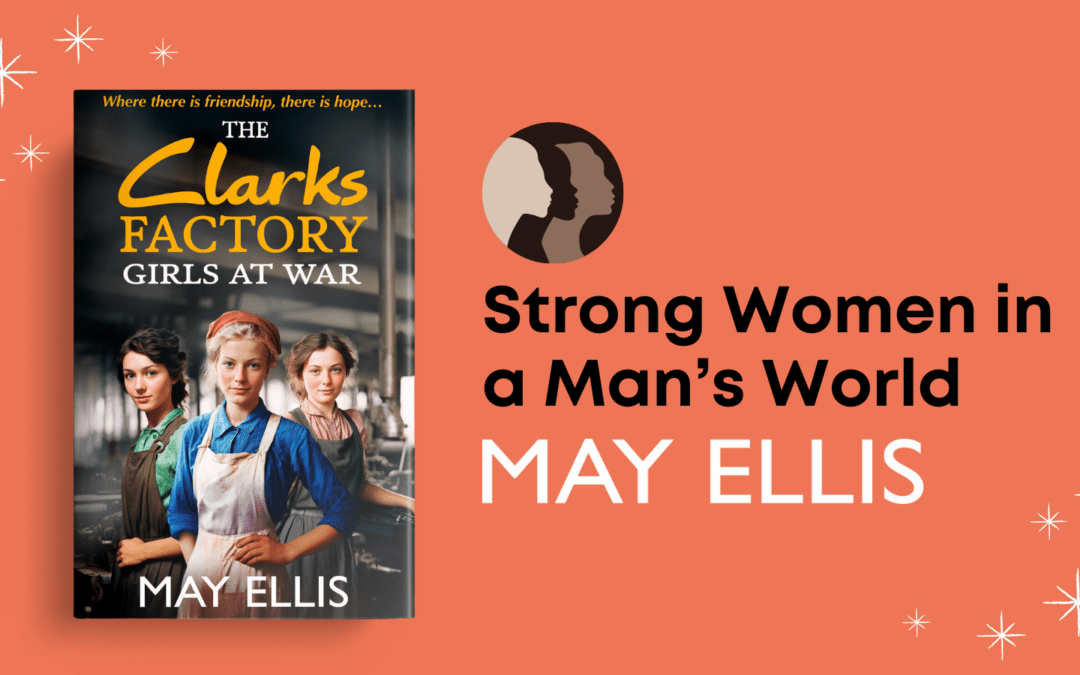
The Clarks Factory Girls at War by May Ellis is out on 9th March! Pre-order your copy here 🧡
It was a man’s world in 1914 – women didn’t even have the vote! Yet, in the village of Street in Somerset, where Clarks Shoes is based, some women had a huge influence.
Three Clark daughters, Hilda, Alice, and Esther followed their Quaker ethos to serve others. Hilda qualified as a doctor and set up an innovative clinic dispensing new treatments for tuberculosis. Alice was the first woman appointed a director at Clarks. She ran several departments – including the Machine Room where the main characters in my book, The Clarks Factory Girls at War work. Alice was also a leading Suffragist and an academic. The third sister, Esther, spent the First World War supporting and campaigning on behalf of Conscientious Objectors. An older cousin of the Clarks, Catherine Impey, had a worldwide influence after she published the first anti-racist journal – Anti-Caste – in the late 1800s. Like Esther, she also supported Conscientious Objectors in the war and hosted several for a holiday after they were released from prison at the end of the war.
All of these women would have influenced Florrie Bond, who began working at Clarks in 1898. By 1914, she was the sole breadwinner after the deaths of her father and brother, supporting her mother and sister. Her work ethic and determination saw her appointed forewoman of the Trimmings Department – the only woman amongst the dozens of foremen at the factory at that time. Florrie made a strong impression on the Clarks management, although sadly this didn’t translate into equal pay – she earned much less than her male counterparts. The managers did however approve a special gift of £2 for Florrie to enable her to purchase a bicycle. They had heard that she was walking home to the neighbouring town of Glastonbury every lunch time in order to feed her bedridden mother. They decided that having a bicycle would make it ‘easier for her to get to and fro.’ Florrie never married, although she was able to adopt a little girl from the local orphanage, which was very unusual for a working-class spinster, thanks to her standing at Clarks. She spent all her working life at the shoe factory and, like the Clark sisters and Miss Impey, inspired many women and girls to make the most of their opportunities and to live their best lives.