
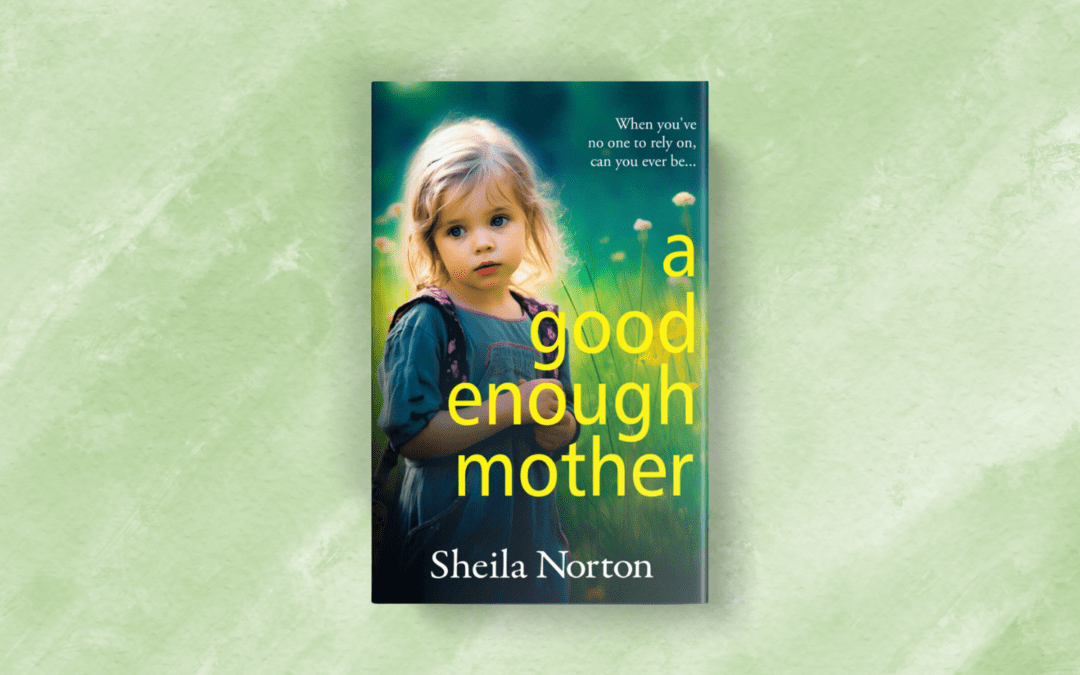
When I decided to include coercive control in my new novel A Good Enough Mother – albeit only as part of the background – I knew I had to be careful, and respectful. I’m grateful to say I’ve never endured anything like this, and there’s nothing worse than a writer trying to sound authoritative about something outside of their personal experience. I could, however, as a mum and grandmother myself, use my empathy to try to imagine how a young mother who’s been through such an experience might feel, after she’d managed to get away and rebuild her life and that of her children. So this was how I approached the creation of my main character, Jess.
Jess is a twenty-three-year-old single mum of two children, who split from her ex-partner when she was pregnant with her second child. At the beginning of the story we don’t know exactly why she left him, only that she’d needed to get away. But what we do learn about Jess is that she lacks confidence in herself – and we realise this is because of a gradual but constant stream of criticism she’s endured over recent years, not just from her ex, but also from her father. I know that often, victims of coercive control are slowly and deliberately isolated from the people who love them . . . but in Jess’s case she was already alone in the world when she met her ex. She’d imagined he would give her the love she craved, but like all abusers, he’d just made her feel worthless.
If your self-confidence has been undermined, it must be hard to believe you’ll do anything right. And even in the best circumstances, parenting can be really difficult! All parents make mistakes; but Jess constantly questions whether her love for her kids is enough; whether she’s, in fact, any good as a mother. How this all pans out when Jess makes friends with her new neighbours, is the subject of the rest of the story.
Although this was a difficult situation to start writing about, I really enjoyed developing Jess’s personality, showing how much stronger she became during the course of the story, and how her fierce and protective love for her children helped her, eventually, to stand up for herself and trust her own instincts. I wanted, even as her creator, to tell her I was proud of her!
Real life, I know, isn’t like a novel. But I do like a happy or hopeful ending – and I sincerely hope that’s also the case for any of my readers who might have lived through anything similar.
To learn more about No More Week 2024 and to access resources, visit nomore.org.