
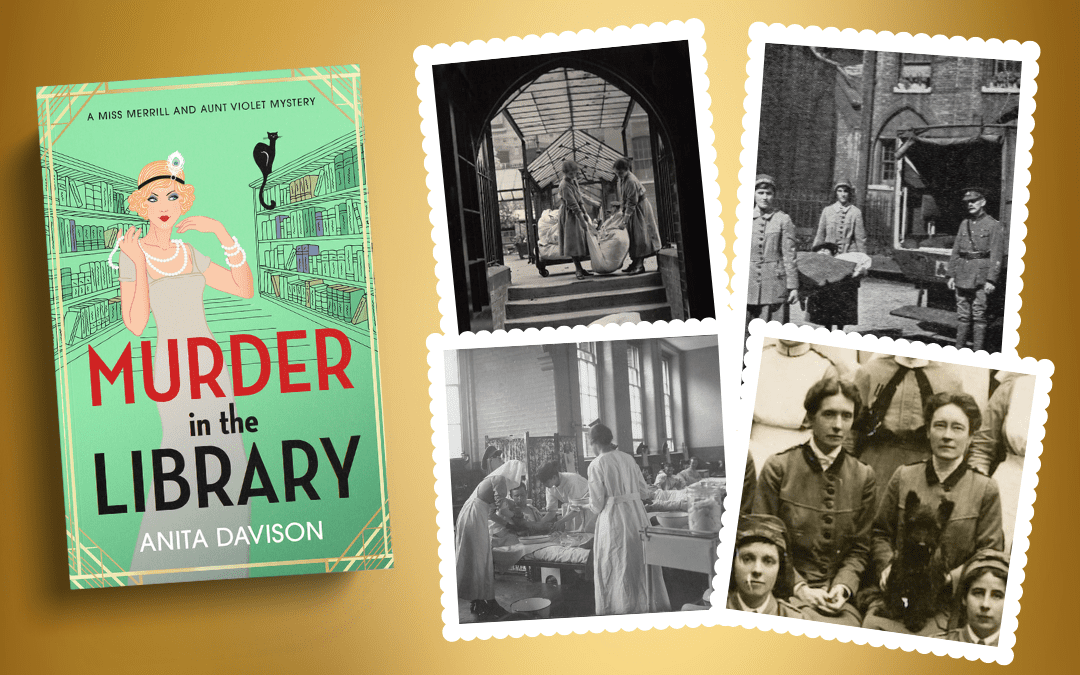
After the infamous October 1915 ‘Theatre bombing’ in London the previous year, Hannah Merril and her Aunt Violet have rebuilt the bookshop in Covent Garden. Larger than before and with modern fittings including a basement storeroom and electric lighting, she and her aunt run the business with Archie and the company of the bookshop cat, Mr Bartleby.
Among their customers are nurses and VADs from the nearby Endell Street Military Hospital two streets away, recognisable by their grey-brown tunics and soft caps. Established the previous year by Doctors Flora Murray and Elizabeth Garret Anderson, the hospital occupies a disused Victorian workhouse complete with high walls and massive metal gates. Staffed almost entirely by women, these two suffragist doctors run it with efficiency and compassion.
Aunt Violet is a patron and convinces Hannah to volunteer in the hospital library located in a vast recreation room where recovering soldiers also play billiards, listen to the gramophone or watch performances on the stage put on by volunteers and patrons. The library was designed to serve both patients and staff, aiming to occupy long-term patients and educate those with life-changing injuries for their transition to normal life after the war.
Hannah overcame her initial squeamishness and took up her aunt’s challenge, combining her work at the bookshop with several hours a week at the hospital where she enjoys her interactions with recovering soldiers on her ward rounds, reading or writing letters for those who need help, and searching out specific books for the unfailingly cheerful and stoic men.
What Hannah didn’t expect to find in the library one April morning was the body of a murdered soldier. Detective Inspector Aidan Farrell takes over the investigation, but while his focus is on who might have wanted one soldier dead in a building of five hundred men, Hannah and Aunt Violet go in search of a missing VAD. Are the two cases connected, or did Nurse Dalglish leave of her own accord?
In an age where women doctors were only permitted to treat women and children and could not study general medicine or surgery, Endell Street proved women had a major contribution to medicine. Between from May 1915 and December 1919 the hospital treated over 26,000 patients and performed over 7000 major operations before being shut down at the end of WWI.
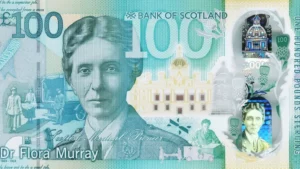
In tribute to these women, the Royal Bank of Scotland issued a £100 banknote in May 2022 featuring a portrait of Dr Flora Murray painted by Francis Dodd in 1921, together with an image of female stretcher bearers outside Endell Street Hospital.
Sources:
Women as Army Surgeons by Dr Flora Murray
Endell Street by Wendy Moore