
A blog post by Peter Gibbons, author of The Saxon Warrior series!
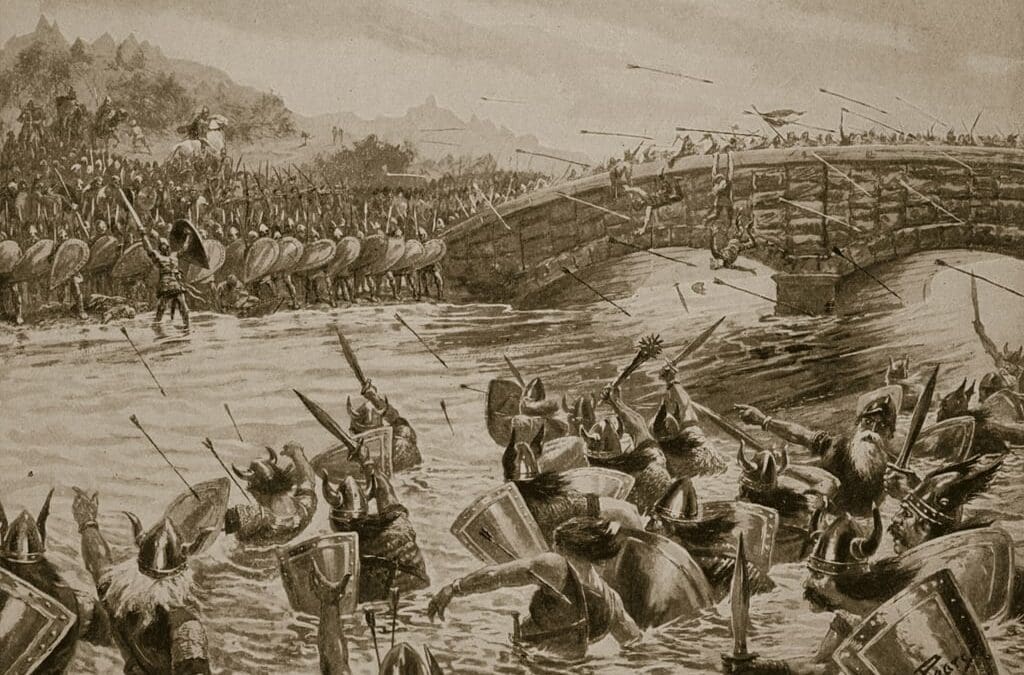
The Saxon Warrior Series deals with the events up to and following the historic Battle of Maldon. Sword Vengeance is the fourth book in the series and takes place in the aftermath of that historic battle, the consequences of which would change England forever. The battle itself is relatively well documented in the poem of the same name composed at the time, but the aftermath, however, is a little harder to piece together. A number of different historical texts exist to help try and build a picture of those events, which include the account of the battle in the Anglo-Saxon Chronicle, the Lives of St Oswald and St Ecgwine written by the monk Byrhtferth, and the Book of Ely.
The Book of Ely is a collection of documents and charters which recorded the conveyances and landholdings along with some historical anecdotes and facts. It was written in the twelfth century, but records a large number of charters and details from the time of Maldon. In the Book of Ely, we learn that the Vikings killed Byrhtnoth by forming their spear and shield phalanx, charging the Saxon ranks and decapitating the ealdorman. The decapitation of Byrhtnoth was confirmed in the eighteenth century when Byrhtnoth’s tomb was opened to reveal a tall, headless skeleton.
The Anglo-Saxon Chronicle contains the details of the Viking leader Olaf Tryggvason’s conversion to Christianity. The general tone of the chronicle is that the battle at Maldon was a sort of pyrrhic victory for the Vikings, who may have won the battle but in doing so lost the war and retreated back to their homeland. The writer of the chronicle viewed the battle as a spiritual success, in that Olaf was converted to Christianity and vowed to become an ally of the Saxon kingdom. Olaf left and never returned to England and he went on to become king of Norway and attempted to convert that country to Christianity.
King Æthelred paid an infamous gafol to the Vikings in 991 in return for their agreement to leave England. That payment was ten thousand pounds of silver, but when they returned again a few years later the payment rose to sixteen thousand, and then twenty-three thousand pounds of silver. The Chronicle implies that the policy of payment was a failure and that King Æthelred was badly advised by Archbishop Sigeric. It is here where we first see the use of the epithet of Unready, or Unraed, ‘badly advised’ in Old English. The ultimate fallout of the gafol is the return of Sweyn Forkbeard, the Danish king who returned again to England with fire and sword and whose son, Cnut, would ultimately conquer and become king of England in 1016.
Sword of Vengeance takes place in the immediate aftermath of Maldon, where Beornoth takes his sword and his savagery to exact brutal vengeance on those who betrayed his bothers of the sword at the Battle of Maldon.