
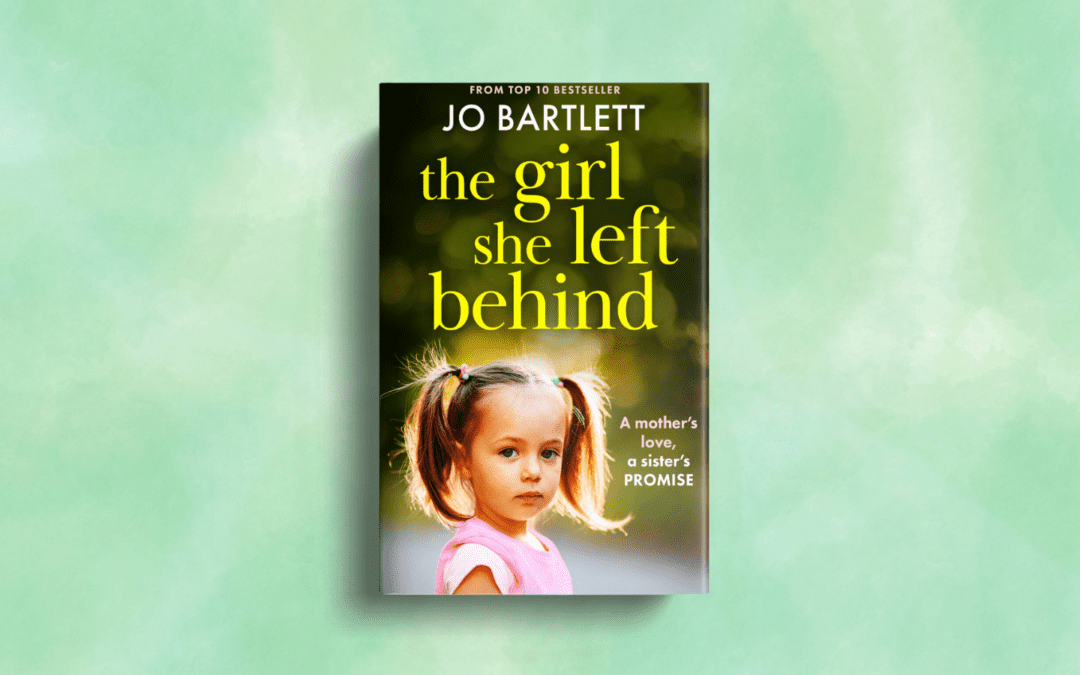
I’m delighted that one of my lovely friends, Katie Chapman, is joining me on the release day of The Girl She Left Behind, to tell us in her own words all about life as a social worker. It’s a role that’s featured in the novel, and if you’ve read my post about working in the foster care field, you’ll know that those experiences were part of what generated the idea for the story. It was whilst undertaking that role that I first met Katie and, although she now has a very different career, I’m so happy that we’ve stayed in touch. Here she is to tell you a bit about her life as a social worker. Over to you Katie!
My name is Katie Chapman, I am 53 and live with my partner. I have three grown-up kids who are all doing their own thing now. I was a single parent when I decided to go to uni at 38 – I never did like doing things the easy way round!!! I qualified as a social worker in 2011, and held the role for approximately 10 years. From discussions with my group of uni friends, there isn’t one of us left working for the local authority, which is sad, but understandable, given the workload and pressure of the role. It was a role I loved, was extremely passionate about and still am, and a role I felt was a privilege to undertake. I made some very serious decisions for children and young people in my time as a social worker, and I just hope that they were the right ones.
What made me want to be a social worker?
I had completed my NVQs to be a teaching assistant and was working at a local primary school. My marriage ended, and after a couple of years of sorting my emotional state out and supporting the kids, I decided I wanted to be able to financially support myself and my kids and be able to provide them with a good life. I was working with lots of children with special educational needs, however it was evident that for most there were a multitude of reasons that contributed to their difficulties, and in order to support them I wanted to work in a more holistic way, which was not possible in my role as a teaching assistant. Becoming a teacher would have been a natural progression, however it was clear that this would not allow me to work with children in a holistic way.
What did a typical day look like?
Hmmmm to be honest as a social worker there is never a typical day, which was also part of the draw for me. It’s very difficult to even describe a typical day, particularly as I worked in several different areas of social work, initially in the children in care team, then adoption, and then fostering. Each of these roles was very different, however, what was typical about my work is that I was always very child-focused in my approach, no matter the role I was undertaking.
What do you wish you’d known before becoming a social worker?
Simple – caseloads were always too high, and that made me feel that I wasn’t able to do a good enough job.
What areas of social work did you specialise in and why?
As I said above, I did a few roles in social work, and they were centred around children in care. I was passionate about this area of social work as it was evident the outcomes for these children and young people fall behind national expectations, and they have very little power or control over their lives. I wanted to be in a position where I could advocate, push, fight for young people’s rights, and try to help them achieve their potential.
What were the best and worst parts of the role?
The best parts of the role were spending time with children and young people, finding out exactly what was important to them, and working towards achieving their wishes where possible. However, I did draw the line at getting in the paddling pool with one little girl when I visited her!!! I did have a go on a tyre swing though. And enjoyed playing with Playmobil and Lego – I found that going to see a child or young person without an agenda was always rewarding, and I also found that’s when they would normally tell you something important about them. The very best part of my job was when I worked in adoption – the nice social worker role!! Forming families was an amazing privilege.
The worst part for me was court work for numerous reasons. With caseloads at such ridiculous levels, I didn’t feel able to write court evidence and court care plans that were at the level that I would have liked. Due to time restraints often I felt restricted in my time to gather evidence, and see family members, plus a range of professionals that would be beneficial to my evidence. The other aspect of court work I didn’t like was the waiting around while legal representatives talked with each other, hoping to find a solution outside of the courtroom. The very worst duty I had was removing a baby from birth mother under interim care order and placing with a foster carer on discharge from hospital. Even though the birth mother new this would be happening, even though it really was in the best interests of that child [and I know it was as I also placed him for adoption – he’s about 9/10 now, and I know he has an amazing family who support his additional needs fantastically] it was still an extremely difficult thing to do, and I can still see the birth mother sitting in the side room cuddling him before her mum telling her it was time to hand him to me. Very sad.
With such a stressful job, what did you do to relax?
I’d spend time with my kids, reading, films, music, and walking. I also developed my sewing skills, which was something I’d dipped in and out of since school, but when I was diagnosed with fibromyalgia, it was important for me to have something to do as I was unable to work for several months. When I did go back to work, the sewing remained, as I found it was a really good way of relaxing and thinking of something completely different.
What would you tell someone thinking of becoming a social worker?
Be realistic – you cannot save the world and you can only do so much with all the restrictions that you will face, but there is one piece of advice that I remember being given and that was, never go to a visit with a family or a child/young person with your own agenda, you will gain far more if you don’t. Above all I would say do it, be passionate, the kids out there need social workers.
Was it difficult moving away from social work?
Yes and no to be honest. Yes because it was for health reasons, but also because I changed when my dad died, and I always said to myself, if I didn’t feel able to give 100% to the job then it was time to leave because ultimately, no matter what area of social work you’re in, it is always about the children/young people, and they deserve 100%. And so moving away was a decision that was a natural progression with my worsening fibromyalgia. I am still passionate about social work, still in touch with colleagues and enjoy discussions, but am horrified by the continued lack of support and resources out there, I find that part easy to walk away from, as ultimately it is failing the very people we are there to support and help.
Now I sew! I love it. I enjoy learning new skills, such as pattern-cutting and fitting techniques. It’s important for me to continue learning and when I think back, I’ve always been that way since leaving school.
Thank you so much for sharing your experiences, Katie, and giving us a fascinating insight into your life as a social worker. I know from having worked alongside you just how passionate and dedicated you were to the role. Your story is inspirational, and the image you created writing about the worst part of your job made me feel really emotional, so I can only imagine what it must have been like first-hand. I also know how talented you are in your new career and wanted to wish you continued success, although I already know it’s going to be amazing.