
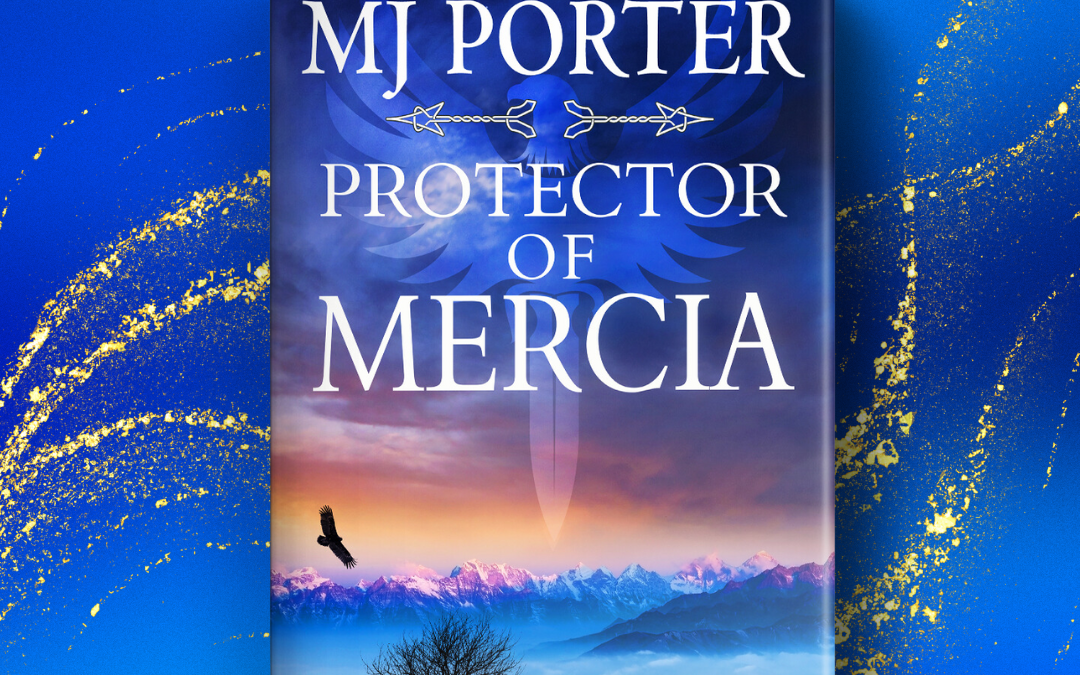
If you’ve read a few of my books, you will know that I don’t very often venture into the Saxon lands on the north-west coast of England. There’s a very good reason for this. I am, quite frankly, a bit scared to do so, mainly because I don’t feel as though I can get a firm understanding of what was happening there during the Saxon era.
Some research will highlight the Norse elements, and others will call it Cumbria, or Northumbria. But in the 830s, before the main ravages of the Viking raiders, it feels very unknown to me. Was it simply a deserted land? No longer the Rheged of the seventh century, and yet somehow part of Northumbria – an idea I struggle with because to me Northumberland is on the north-east.
But in Protector of Mercia, I do take young Icel to the northwest – no doubt to test myself and to see if I could do it.
What I’ve discovered is quite fascinating.
The area can be called Northumbria – after all, it is north of the Humber – on occasion, and indeed Bede used the term – the area south of the Humber was called Southumbria. So, what was in the North?
I think we can start with Chester. Chester, a former Roman site, is well-known, even now there are standing Roman ruins. Admittedly, what Chester might have been like in the 830s is more difficult to pinpoint – so I had a bit of fun with that. Just like when I recreated Londinium for Wolf of Mercia, I don’t ever want to forget that the landscape inhabited was not first inhabited by the Saxons, especially where Roman ruins existed. Chester is often taken to be Mercian, certainly by this date, even if it did fall to the Viking raiders in later years.
And after Chester? What then?
Here is where it becomes more difficult. To the east, we know of Ermine Street and Dere Street, and we know of many place names. To the west? Well, sometimes I wonder if there was even a road running between Chester and Carlise, although obviously there was. And of course from Carlisle runs the remains of Hadrian’s Wall eastwards to Arbeia. But what was between those places? It would seem very little but hills and woodlands, a road leading to York from Chester and potentially, very little else apart from the oft-mentioned Eamont, where King Athelstan is said to have forged his peace with the other British kingdoms in 927 after conquering York (do you see what I did there).
However, we should be wary of such thoughts. If the area was important in the Viking age, it most probably was earlier as well. And so, I sent Icel to have a look. I can’t say he finds much, but it’s a good place to start.