

The history of Wakefield Waterfront can be traced back to the industrial revolution when the area was a hub of industry and commerce. The River Calder and the Calder and Hebble Navigation Canal was an important transport route for goods and materials, and Wakefield became a major centre for textiles, coal mining, and engineering.
During the Victorian era, Wakefield Waterfront was a hub of industry and commerce, driven by the growth of the textile and engineering industries. The River Calder was an important transport route for goods and materials, and Wakefield became a major centre for textiles, coal mining, and engineering.
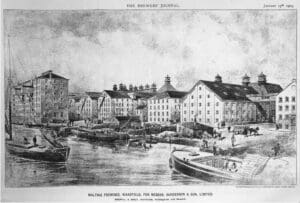
One of the main industries in Wakefield was textiles, particularly the production of woollen cloth. Many of the mills that produced cloth were located along the riverfront, taking advantage of the water for power and transportation. The industry employed a large number of people, including women and children, who worked long hours in difficult and often dangerous conditions.
Coal mining was also an important industry in Wakefield during the Victorian era. The area around the city was rich in coal, and many mines were established to extract it. The coal was transported by barges along the river to other parts of the country.
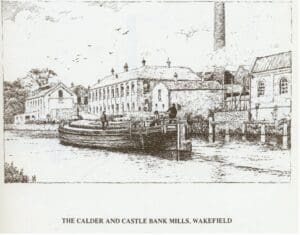
In addition to textiles and mining, Wakefield also had a thriving engineering industry. The city was home to many engineering firms, producing a range of products including steam engines, machine tools, and ironwork.
The growth of these industries in Wakefield during the Victorian era had a significant impact on the city’s economy and development. Many of the historic buildings along the riverfront were built during this time to house the mills and factories that produced textiles and other goods.
The docks along the riverfront were a hub of activity, with barges and steamships coming and going, carrying goods and materials to and from the city. The waterfront was a lively and bustling place, with workers, merchants, and traders going about their business.
However, by the end of the 19th century, the industries that had driven Wakefield’s growth began to decline. Textile production moved to other countries with cheaper labour, and the demand for coal began to wane as other forms of energy became more popular. The decline of these industries had a profound impact on Wakefield and led to a period of economic hardship and decline that lasted for several decades.
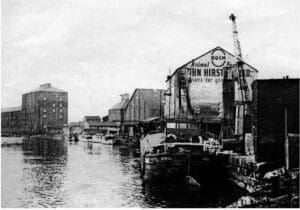
Images used by the kind permission of Wakefield Council Libraries Photographic Collection