
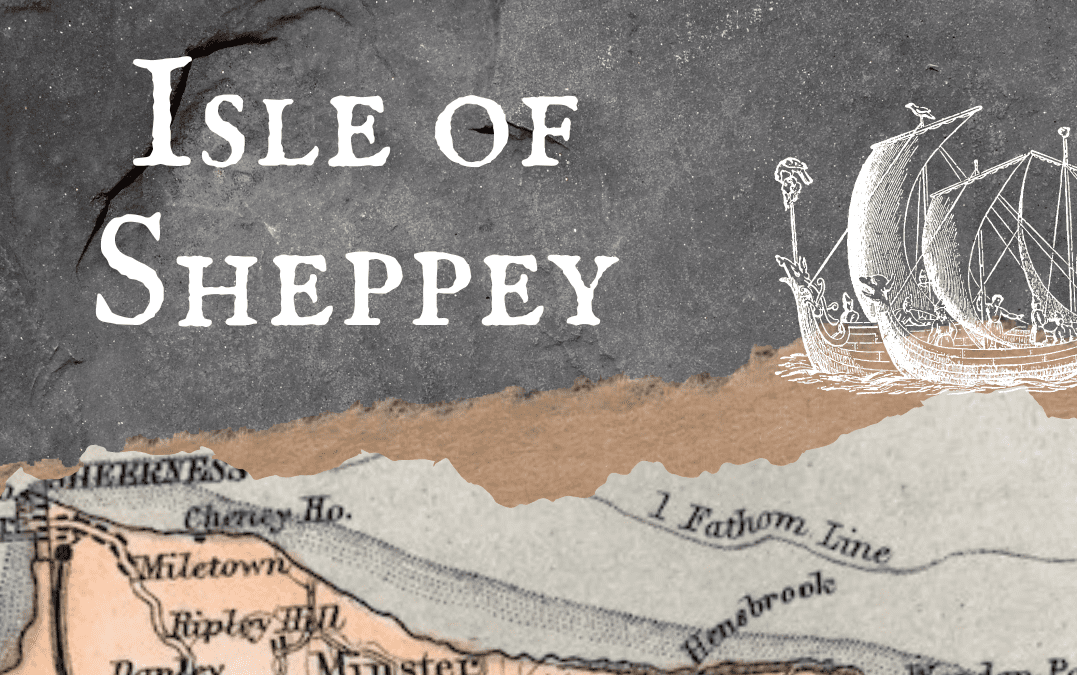
Why did I take my characters to the Isle of Sheppey in Eagle of Mercia I hear you cry. Well, the reasoning was sound – there was a monastery on the Isle of Sheppey, just off the coast of Kent, and it’s written that Viking raiders were there ‘Here heathen men raided across Sheppey,’ the ASC for 835 informs us, although this has been corrected from 832. I played a little with the chronology and had the attack in between these two dates in 833. This does beg the question of why the Viking raiders might have chosen the Isle of Sheppey. It’s widely believed that the Viking raiders looked to such coastal sites in their campaigns because they were easy to approach, often very isolated from larger communities, and contained wealth and the potential to kidnap the religious living there and take them away to be sold in the slave markets. At this time, the Anglo-Saxon Chronicles offers today’s readers a particularly ‘Wessex’ centric viewpoint and Kent was part of Wessex. (The Anglo-Saxon Chronicle is believed to have been begun in the Wessex court of King Alfred no later than 890). As such, the entries aren’t contemporary to those they record, and give the impression that these were the ones that were most remembered up to sixty years later when they were being recorded. What would become known as the First Viking Age in England was slowly beginning to gain momentum during these early years of the 830s, and the impression that this was the work of the scribes laying the foundations for what would come later, can’t be ignored. And so, the Isle of Sheppey, isolated, with easy access to the sea, and potentially, the interior of both Mercia and Wessex along the River Thames, which might, or might not have been as navigable as it is today, was too good an opportunity to miss as a location for my warriors of Mercia to visit.
Map images of the Isle of Sheppey from 1607, 1806 and 1871 (provided by my Dad).
Get your copy of Eagle of Mercia here: https://mybook.to/EagleofMerciasocial