Primary sources, I feel, are a writer’s best friend, especially for a historical writer as I am.
When researching, it is not always possible to visit your chosen setting, but if you can visit, make sure you don’t simply go to the main attractions, like a castle, etc, but find the time to visit the graveyard of the local church, sit in a pew and study the stain glass windows, lay by the river and absorb the surroundings, listen to the birds sing, the insects buzz and imagine what it would be like in your period. What would you hear then? Walk the back streets of the village or town, find the oldest parts and touch the walls of the buildings and think of nothing but how your characters would have lived. Would their footsteps have walked where yours have?
If you are writing about the area where you live, join your local historical society, where as a member, you can study maps, paintings and photos are that district. Also, the local councils and libraries will have documents and maps going back decades.
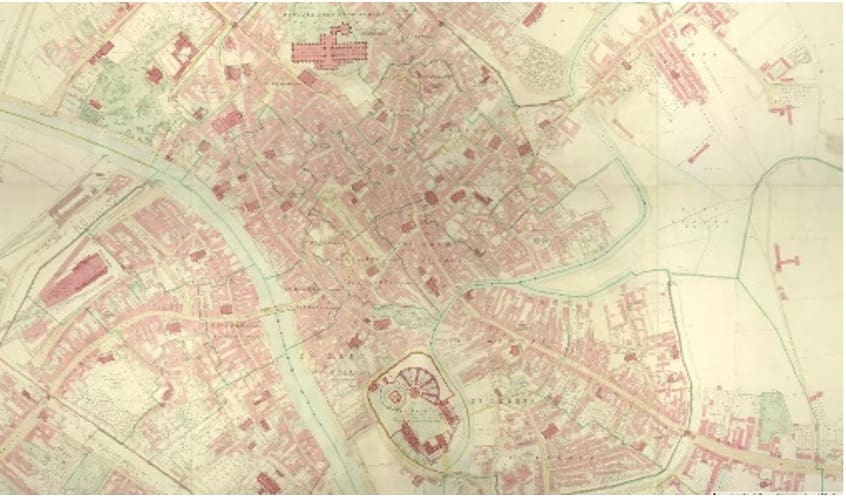
 The photo is taken of a map of York, England 1852. It is something I use for every book I write set in Victorian York. I find maps such a useful tool. Some websites have old maps that are now interactive, so you can zoom in and see the original layout of towns and villages.
Reference books and especially the internet have great antique photos and paintings, some even for sale.
Also, if you use Google maps that is an excellent way to get a bird’s eye view of the layout of the land and going into street view you ‘virtually’ walk down the old streets where your characters walked.
If you write in the Victorian or Edwardian era, you may even have photos of your own family and this is another source you have to look at their clothes, hairstyles, etc. There may be personal diaries available for you to read that will give an insight to those times and lives.
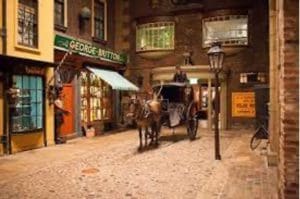 Diaries aren’t the only primary source available to us. We have so many museums and art galleries. I love studying paintings of the different eras and visiting museums that have wonderful displays of every era.
This photo is of York’s Castle Museum which has recreated a typical Victorian street. The details are amazing and so useful for historical writers. I’ve been to this museum twice and will likely go again in the future.
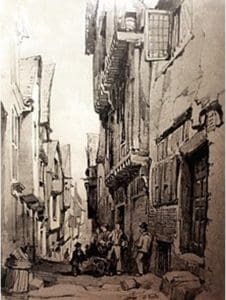
Sketches and paintings give us the artist’s view of those times and from studying them we can see a little of what life was like then. This sketch of the Water Lanes slums in York gives a writer great insight to how they lived. Images like these helped me to create the slum story lines in several books.
We should also be visiting our local or national libraries for books, letters, newspapers and articles written in the eras we write. Naturally, this is difficult for those writing in the ancient periods, but those of us who write about the last few hundred years we have resources available, and we need to use them.
I find it fascinating that we have so many choices to help us become better writers. I guess that is why research is never a chore for me. Researching for my stories often lead to other ideas for new books, which is exciting!
Get your copy of The Orphan in the Peacock Shawl below: